Autumn came with a sharp wind and an ache behind it. The fields that had been gold in August were bare by late September, and with the harvest done, people finally had time to think — which wasn’t always a blessing. The war had stretched into its second year, and though the newspapers still talked of progress, few in the Pontiac believed victory was close.
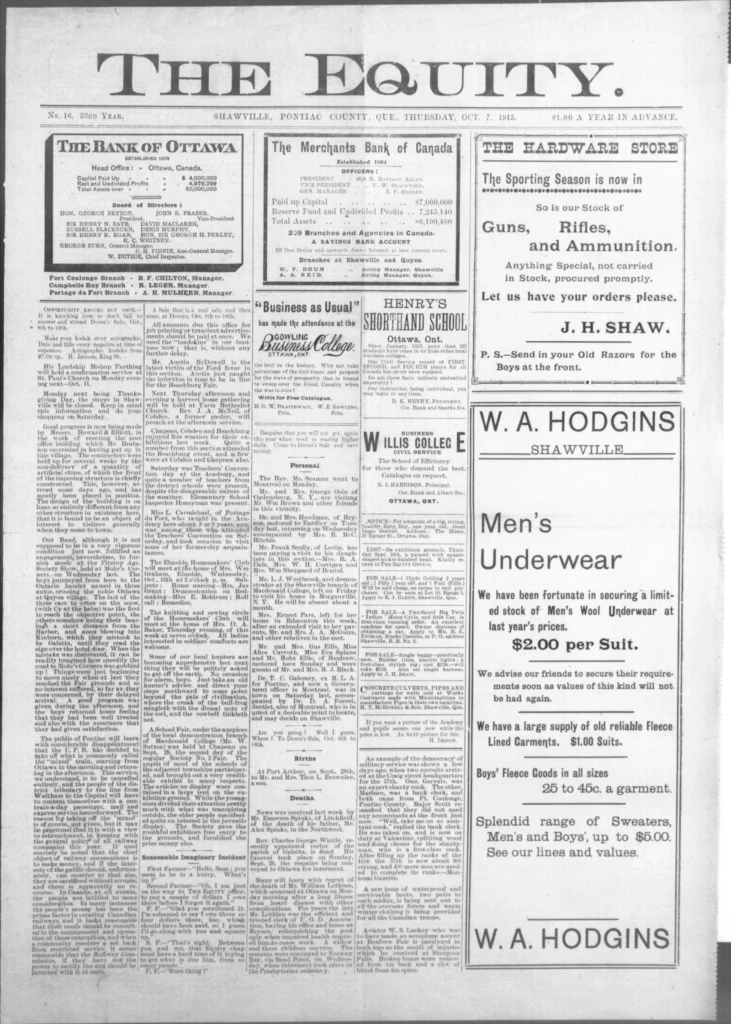
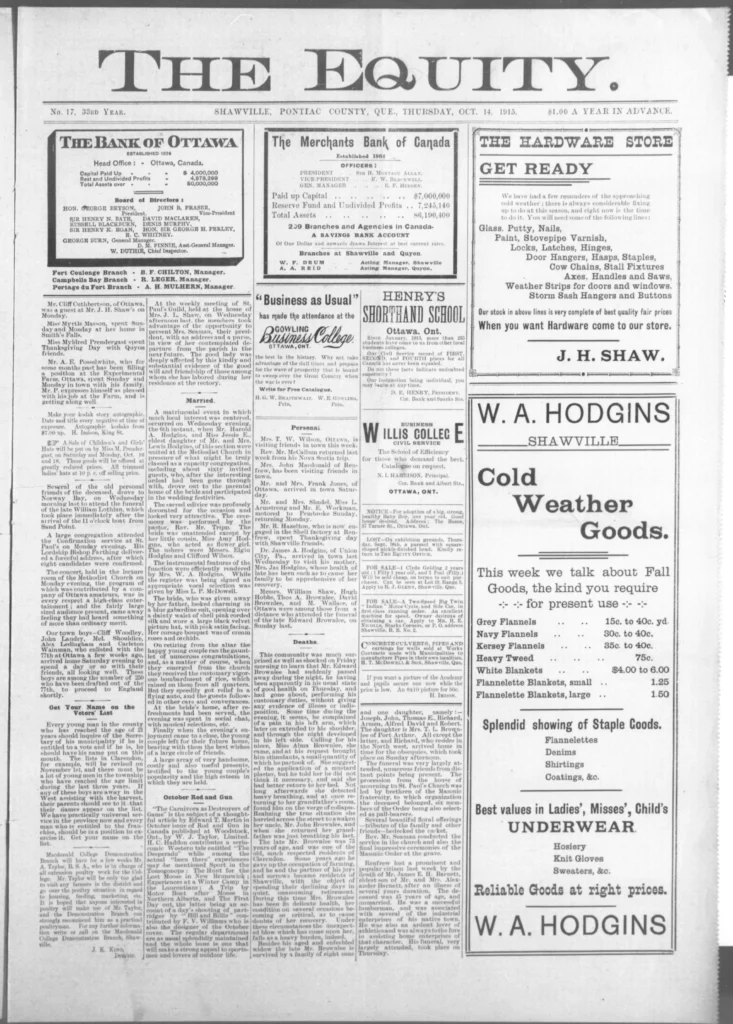
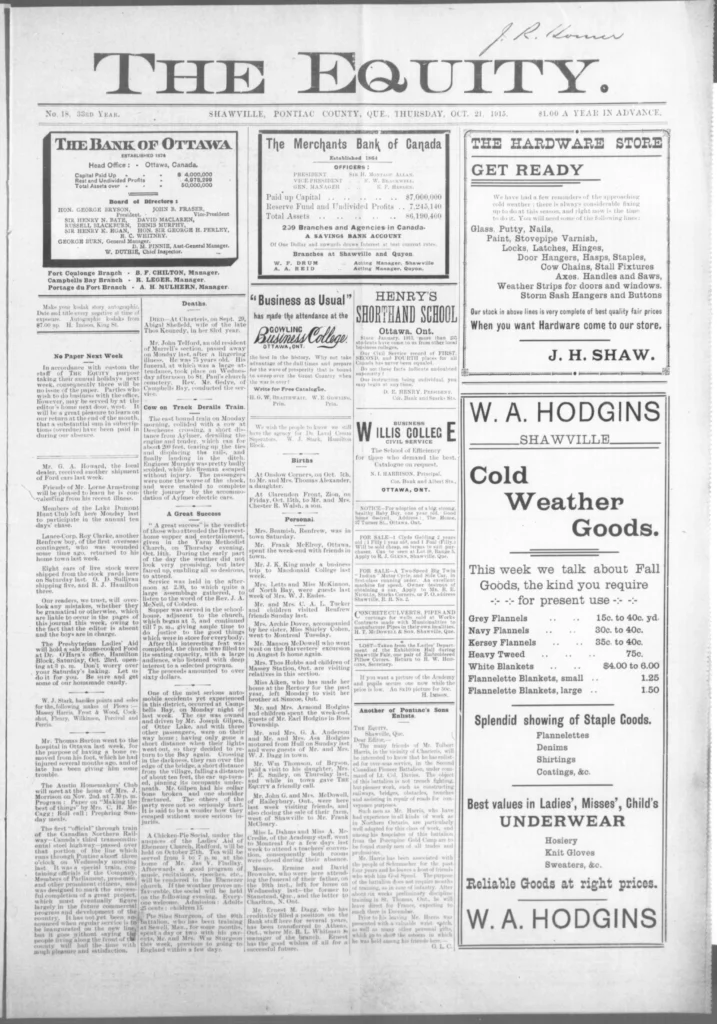
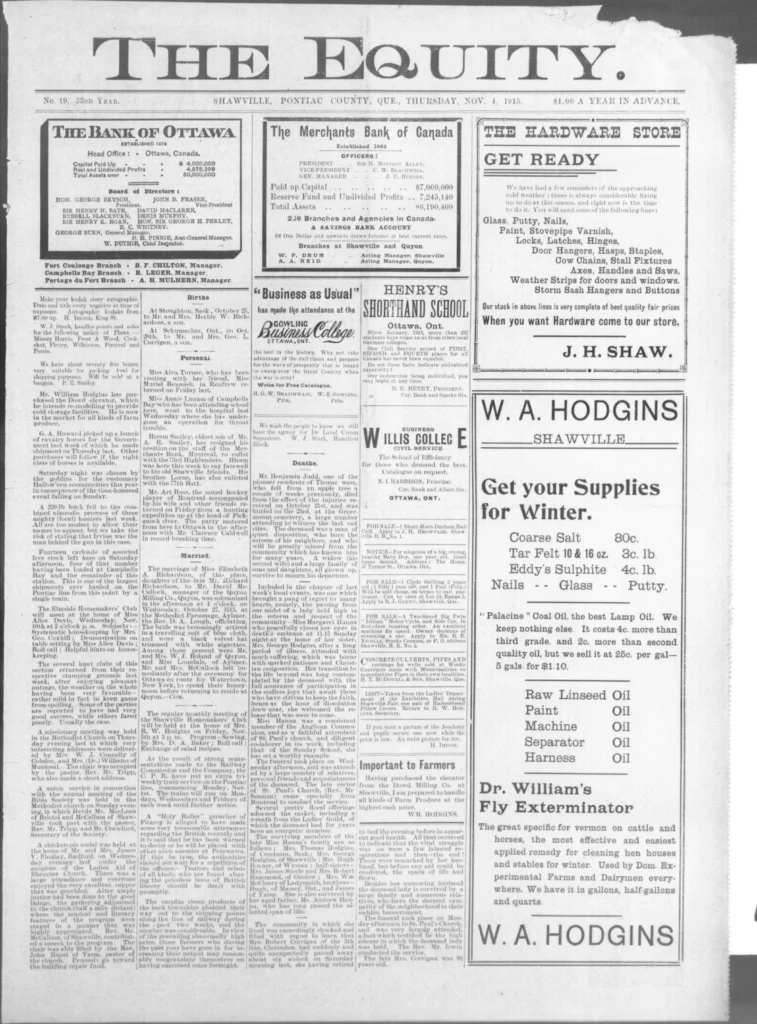
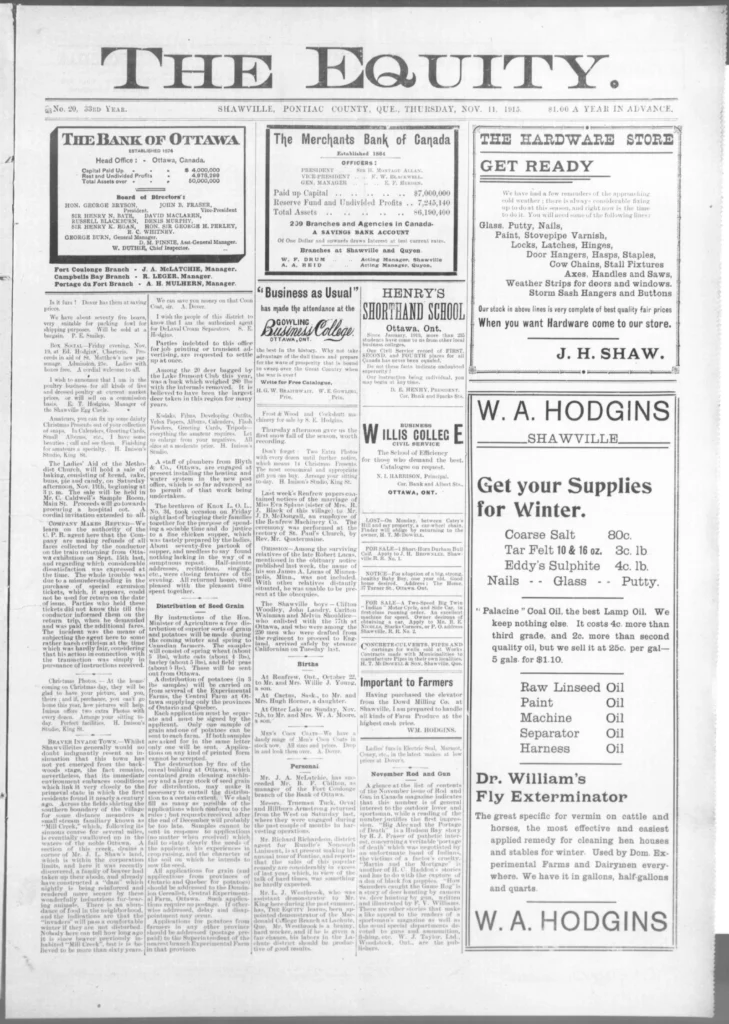
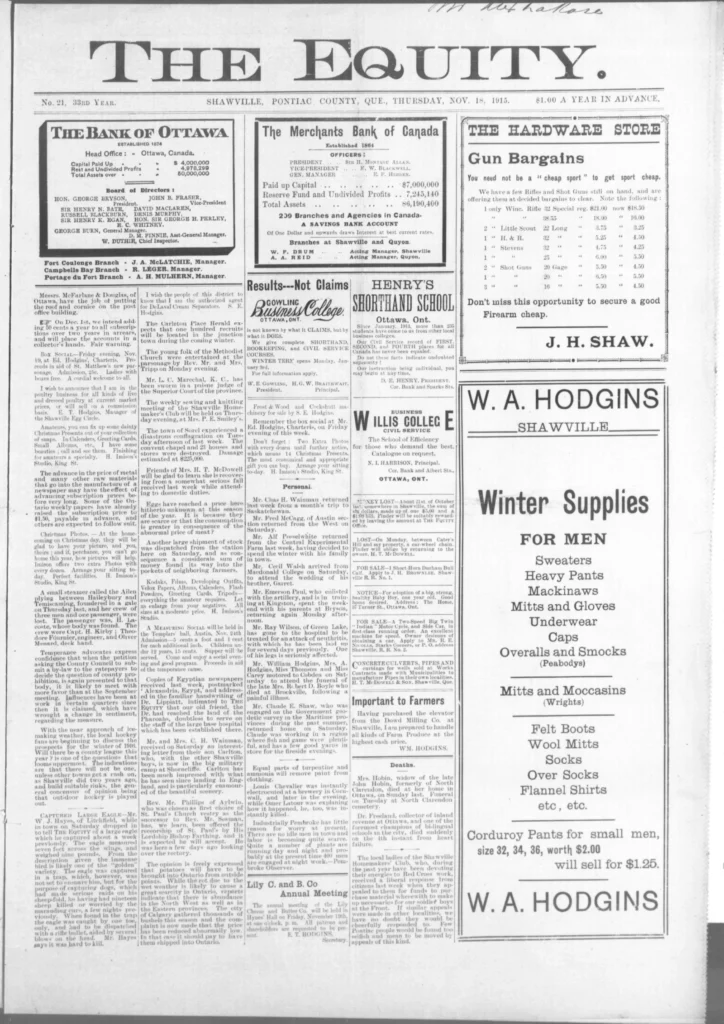
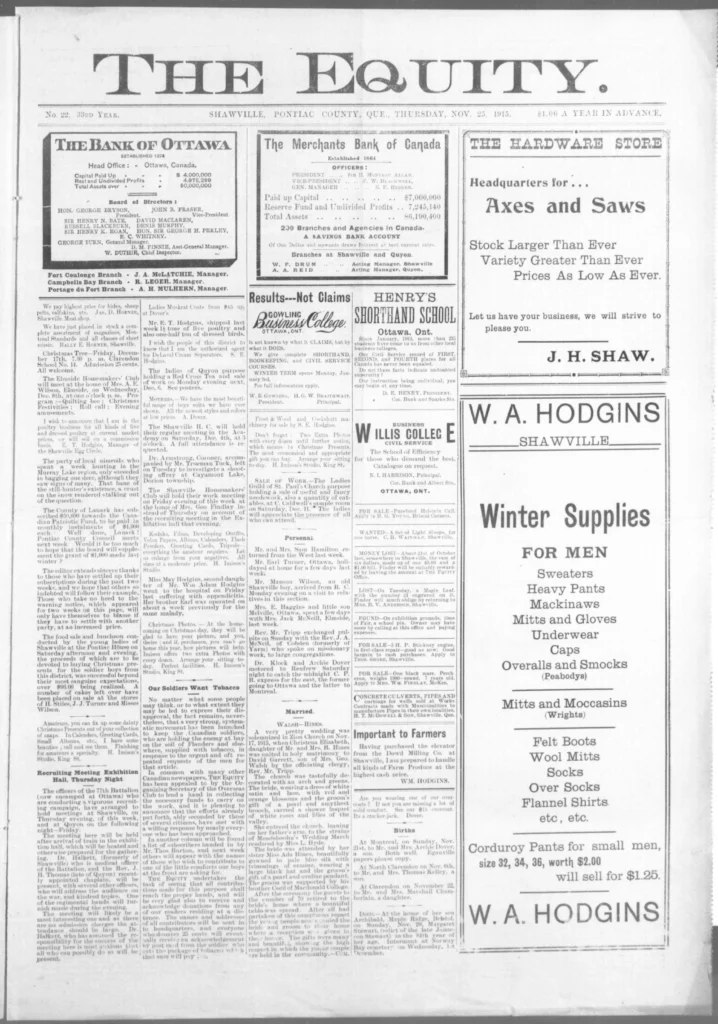
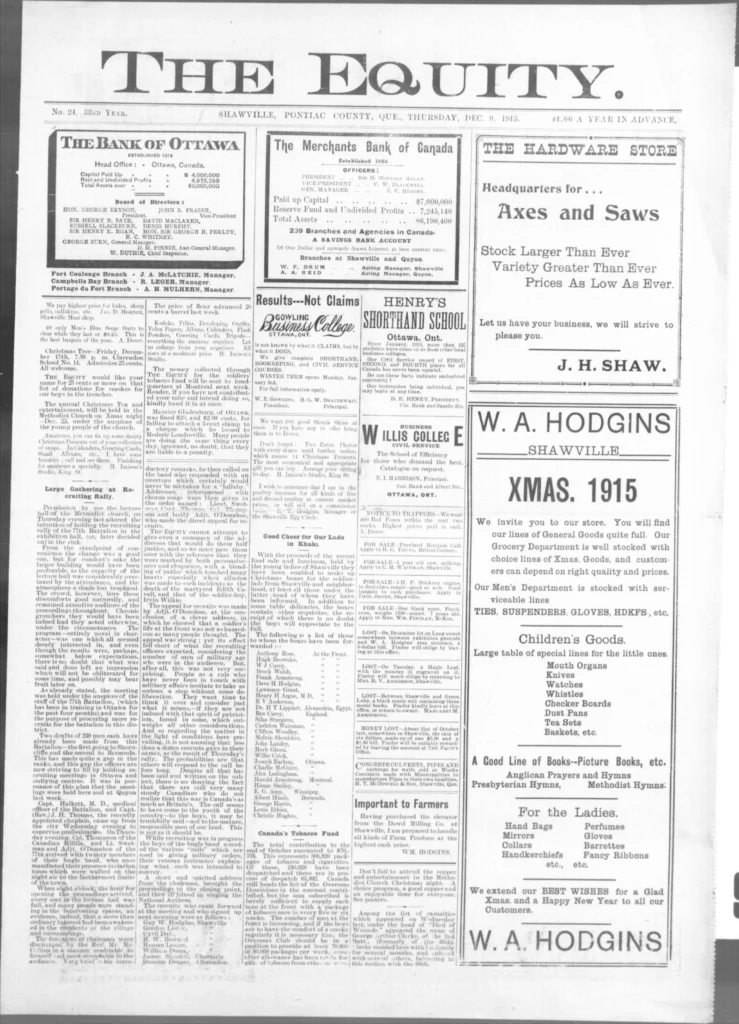
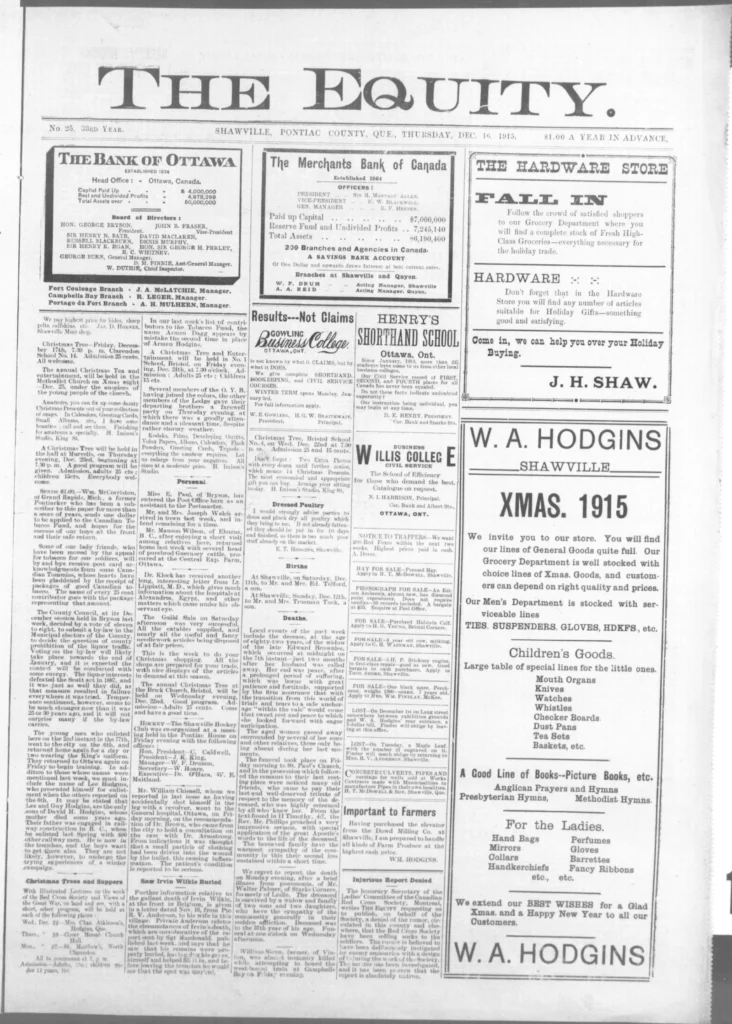
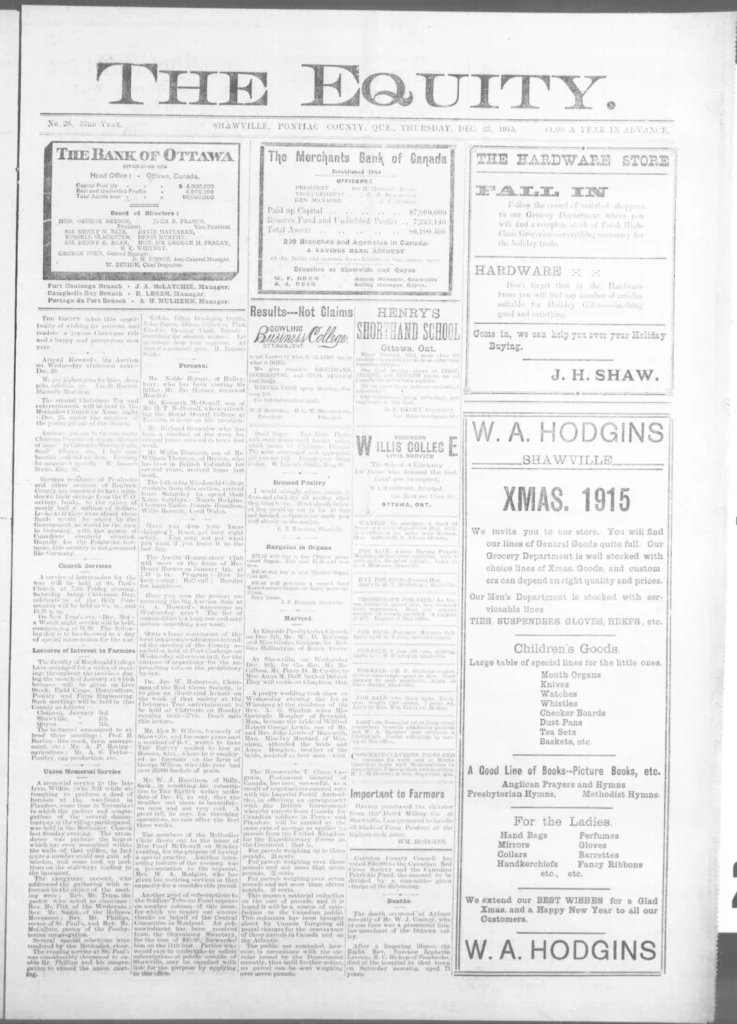
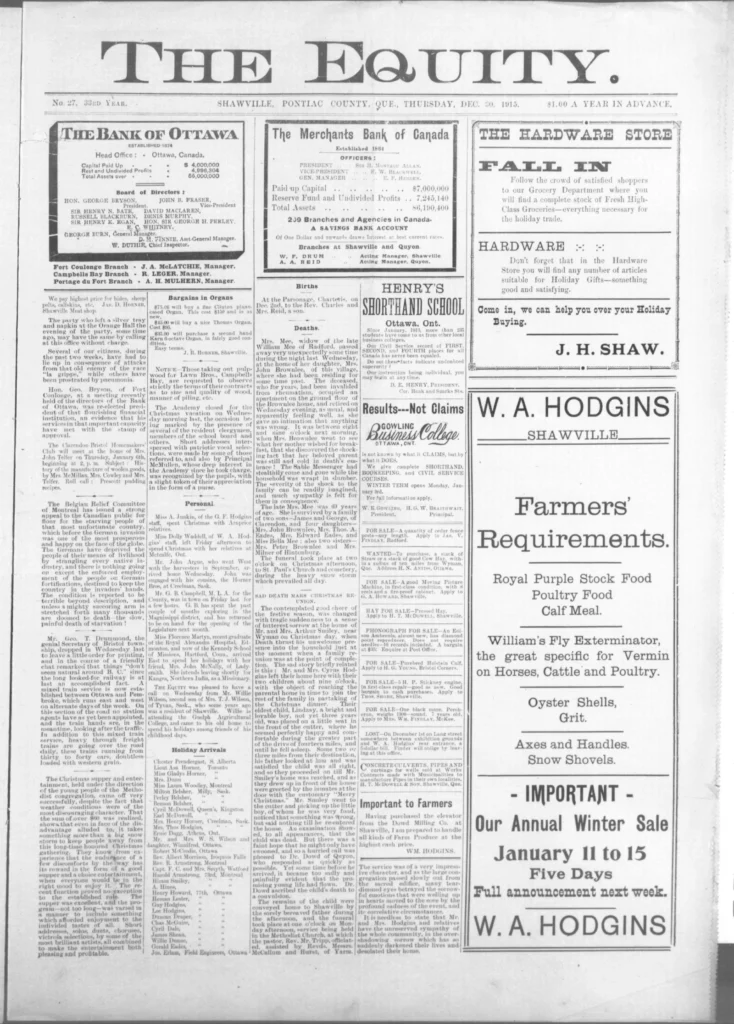
The first frost came early. In town, stoves were lit again, and at every post office, people scanned the lists of wounded and missing before opening their own letters. The casualty columns in The Equity were longer now, and more of them carried familiar names. Some were accompanied by small photographs — smiling faces in uniform beside neat black borders. The editor began printing short notes of condolence beneath them, brief but heartfelt: “He died doing his duty.” It was all anyone could think to say.
Through September and October, the Patriotic Fund drives continued, but they had lost their cheerfulness. The socials were smaller, the speeches shorter. People gave what they could, though the pockets were thinner after a dry summer and rising prices. In Shawville, a Thanksgiving service was held for “Our Boys Overseas,” and the minister’s words struck a chord: “We are thankful for courage, not for comfort.”
In the countryside, men who’d once talked about enlisting began to hesitate. There were still crops to bring in, herds to feed, and families that couldn’t manage without them. The government’s talk of more volunteers hung over everyone like an unpaid debt. Still, a few went. The farewell gatherings grew quieter, less full of music and more full of silence. The goodbyes were shorter now — too many already spoken.
In late October, a shipment of letters arrived together, delayed for weeks at sea. For a few days, the whole county seemed to breathe again. People walked home from the post office with envelopes tucked carefully inside coats. At night, lamps burned later than usual as those letters were read and reread, words fading in places from damp or fingerprints. One soldier wrote that he could still picture Main Street after rain. Another mentioned the smell of hay. Those small details meant more than any battle report ever could.
By November, the weather turned mean — sleet and wind, the kind that rattled windows and found its way through every crack. Yet life went on. The schools held fundraisers for Belgian relief, the Homemakers’ Clubs sewed until their fingers ached, and The Equity printed its usual mix of war news and local notes: a wedding, a farm sale, a council meeting. The normal and the terrible now lived side by side.
Toward the end of the year, a column appeared that spoke plainly what many were thinking: “We have learned not to expect an early peace. The work before us is long, but so is our patience.” It wasn’t stirring, but it was honest. The community, worn thin but steady, had settled into the long rhythm of endurance.
Outside, the leaves were gone and the fields lay quiet. The sound of the threshing machines had faded, replaced by the wind through bare trees and the occasional whistle of a train carrying grain east — toward ships, toward soldiers, toward a war that no one could yet see the end of.