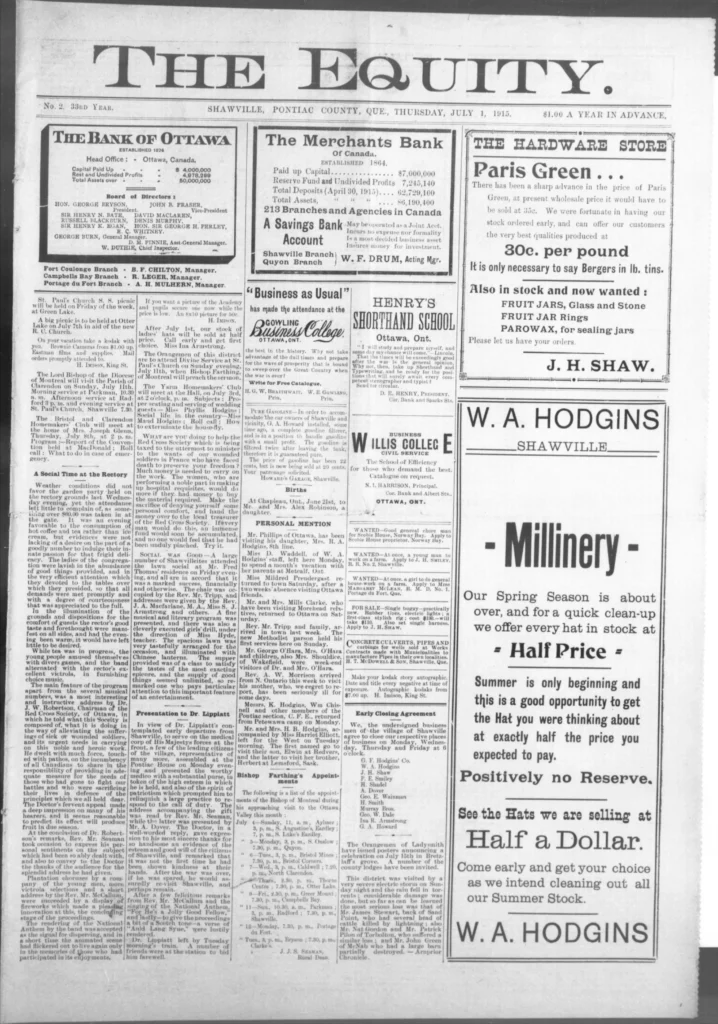
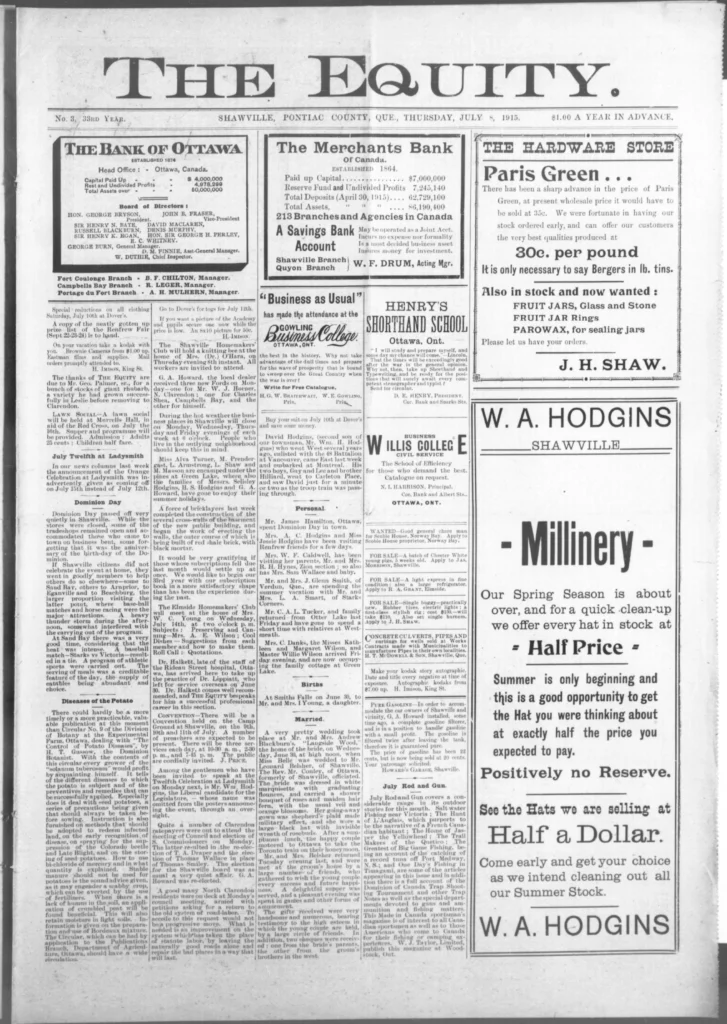
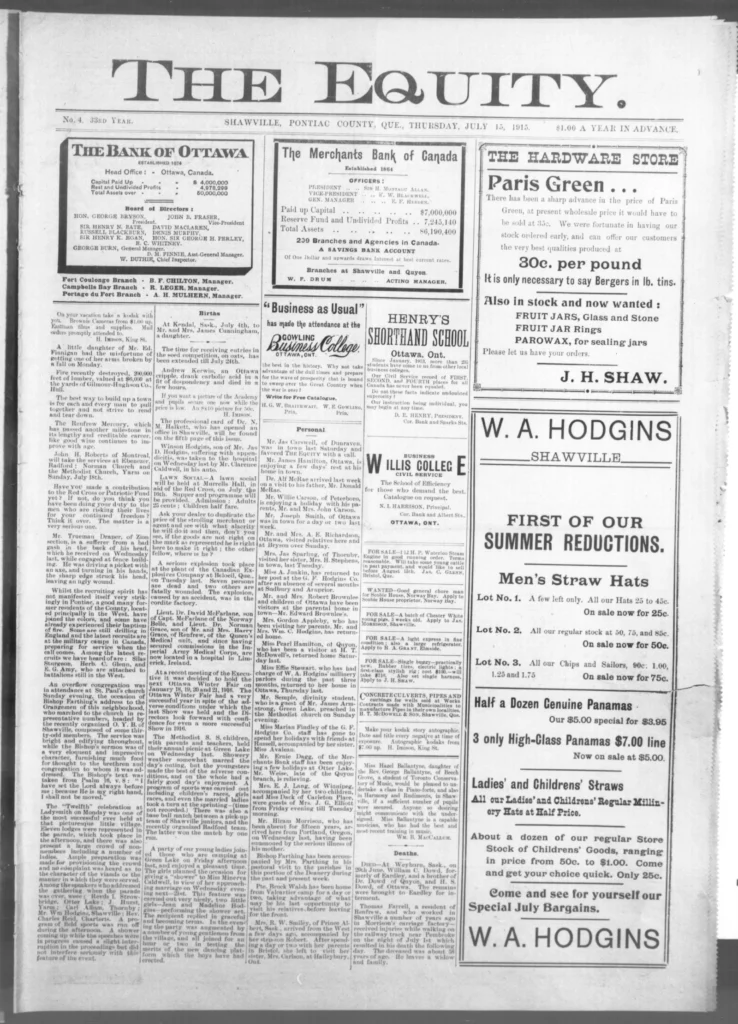
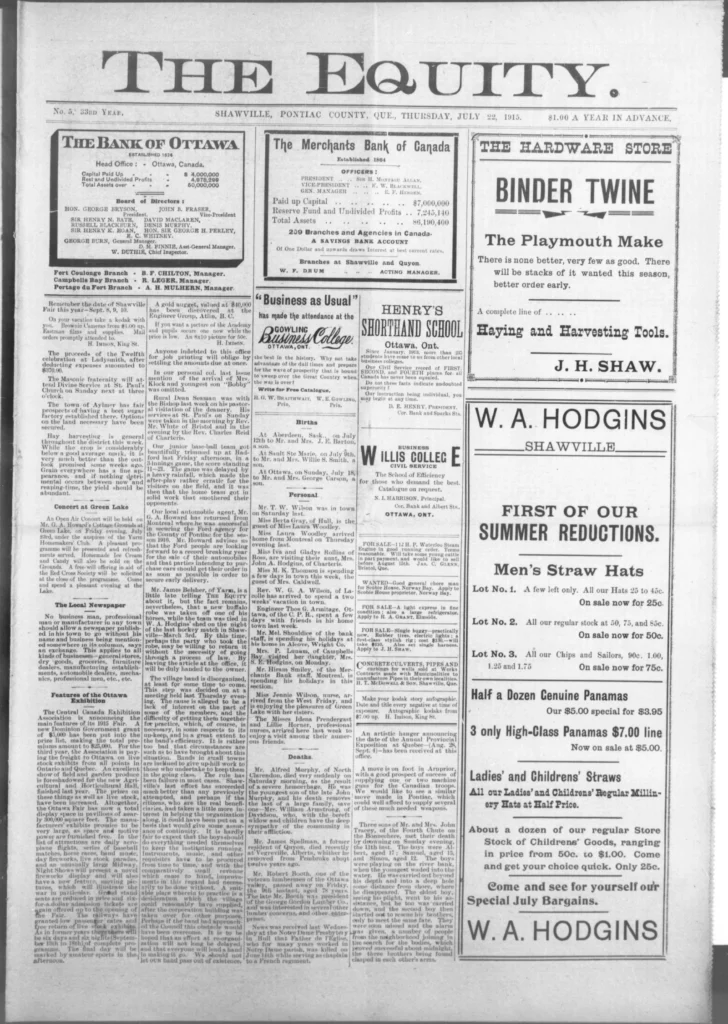
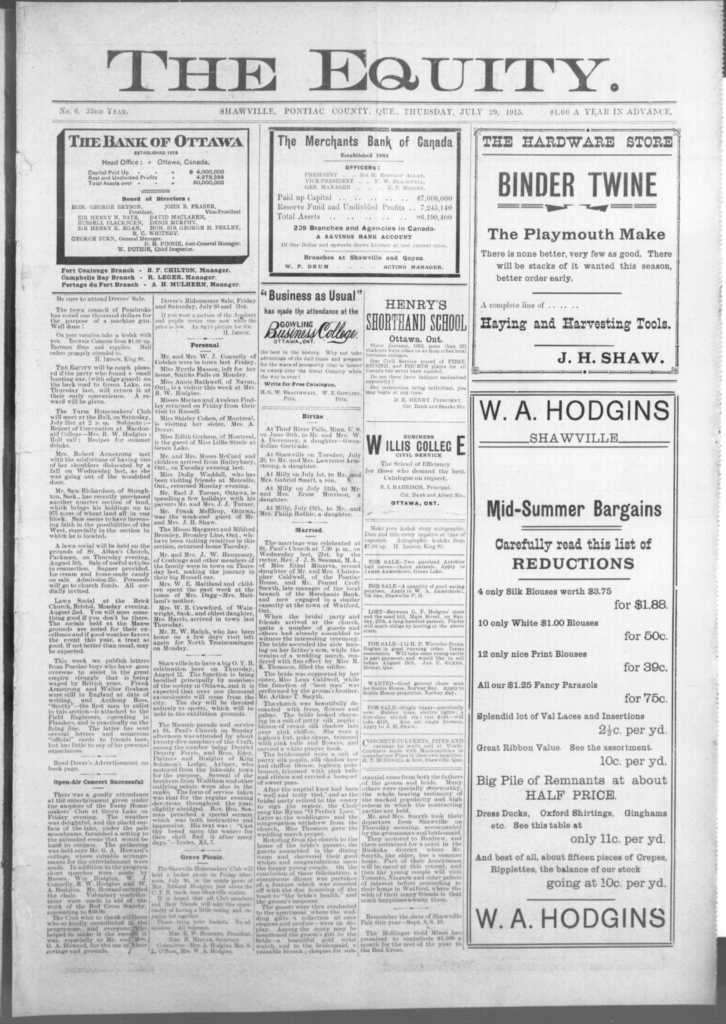
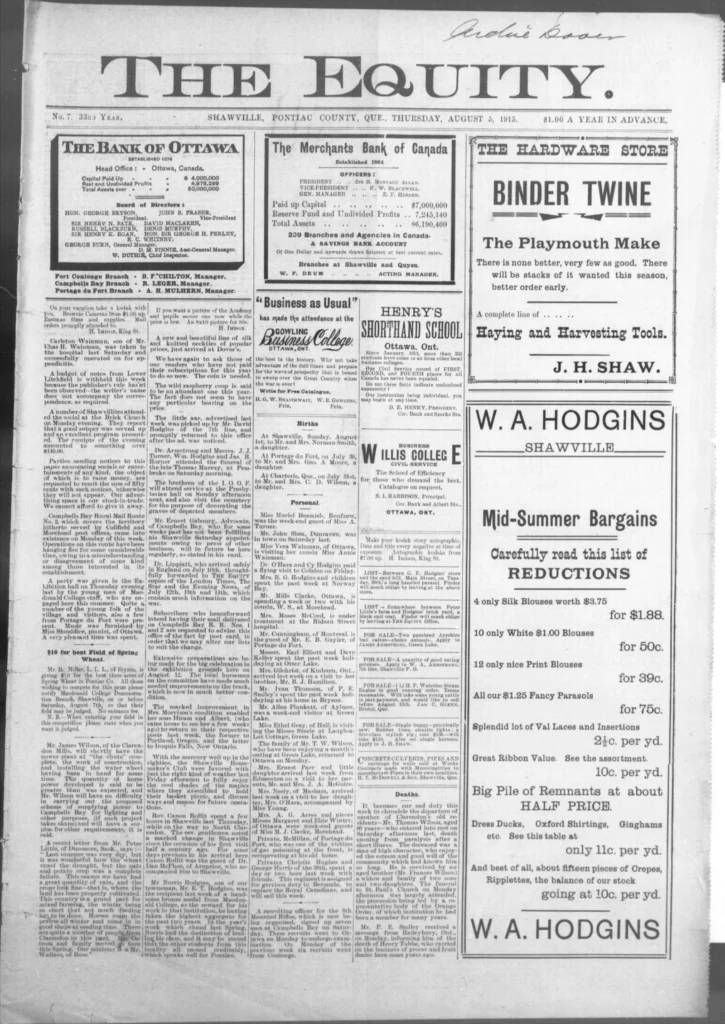
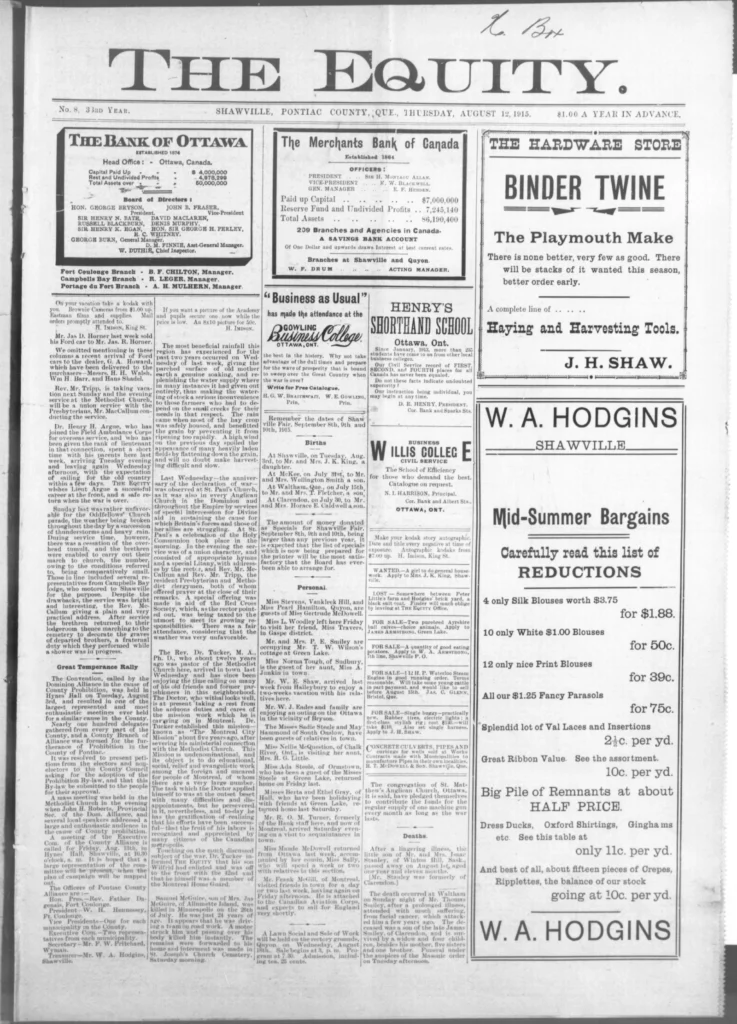
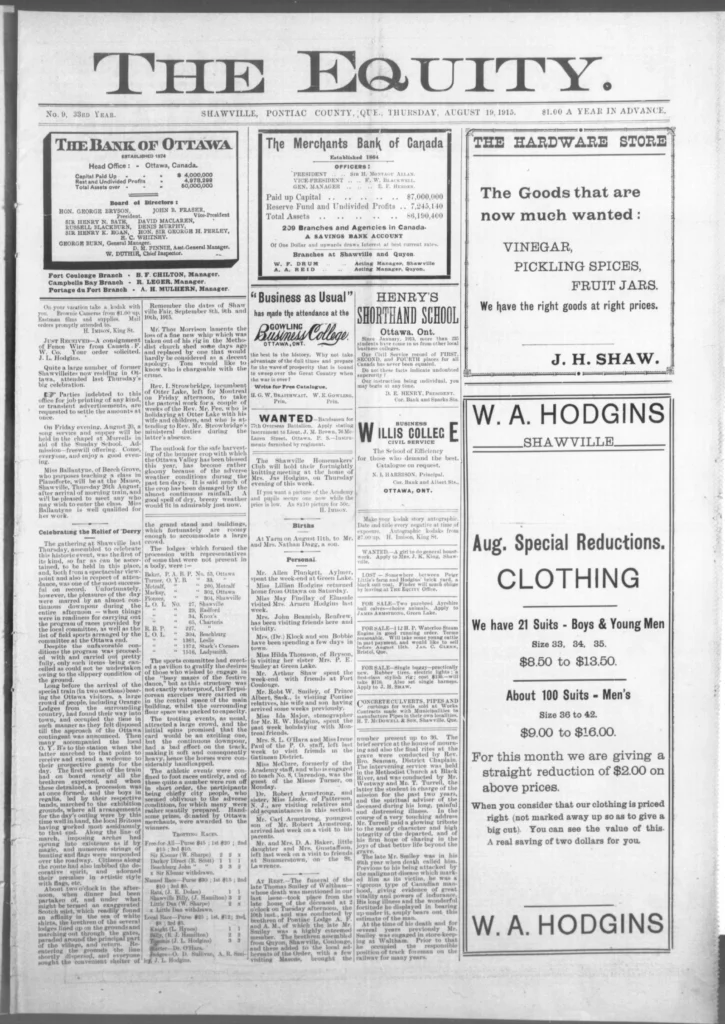
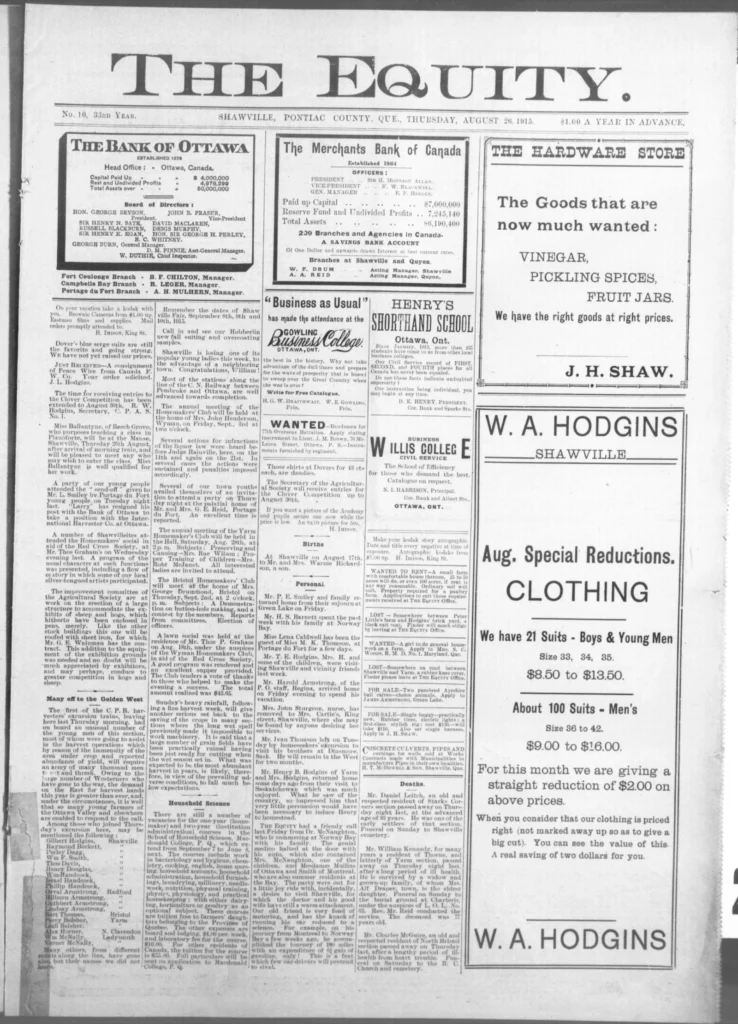
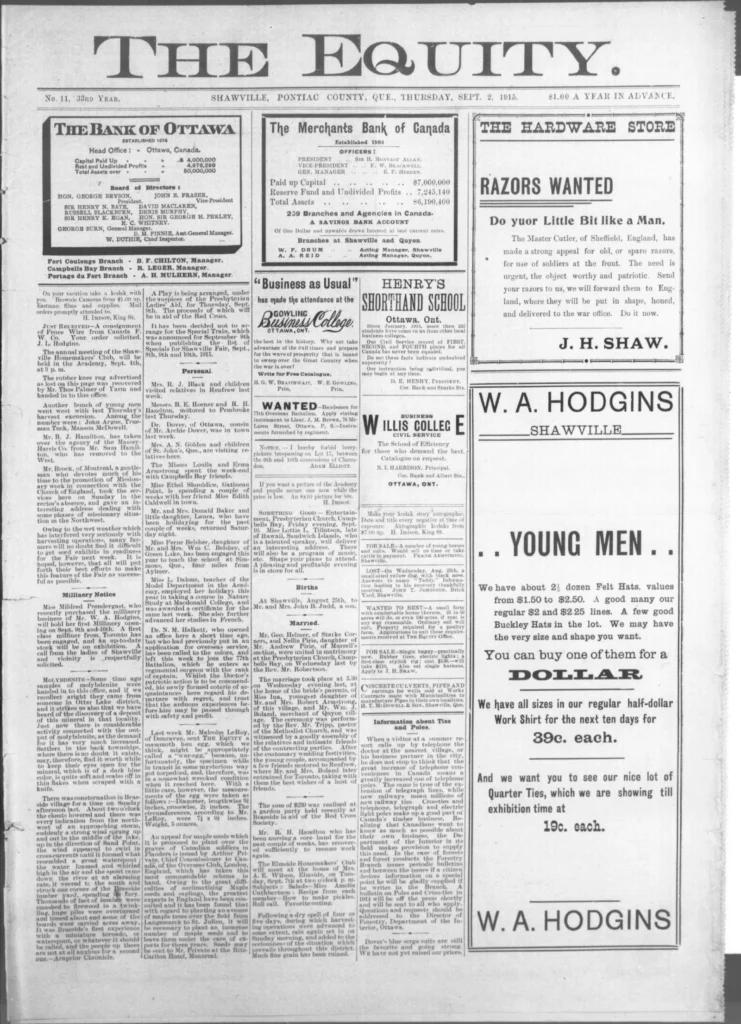
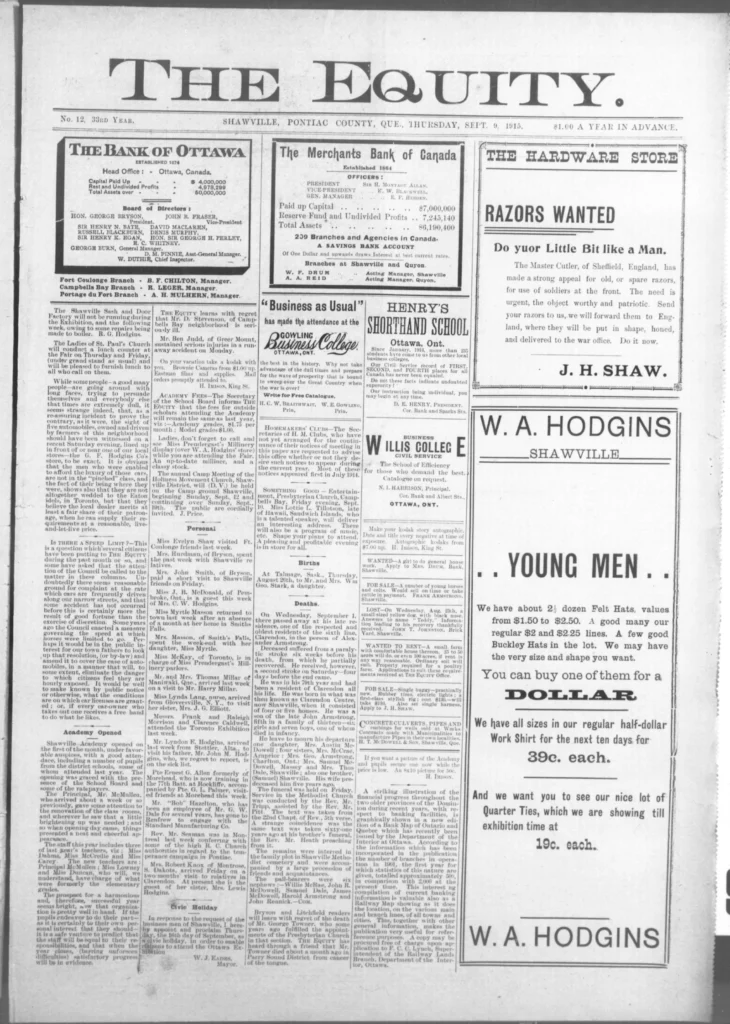
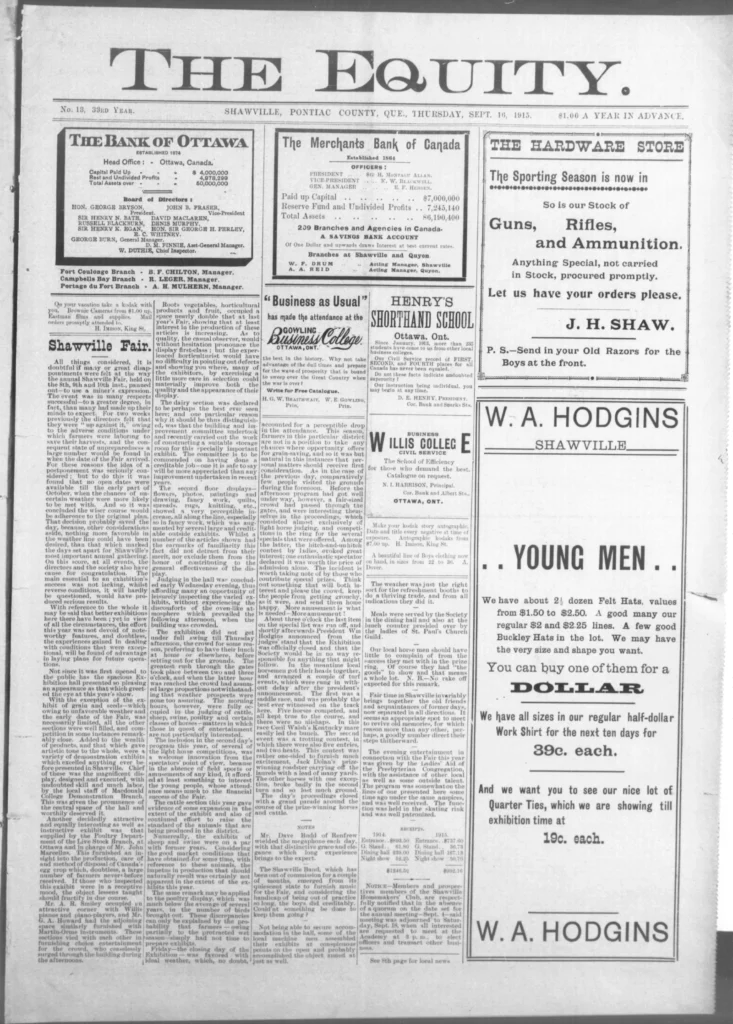
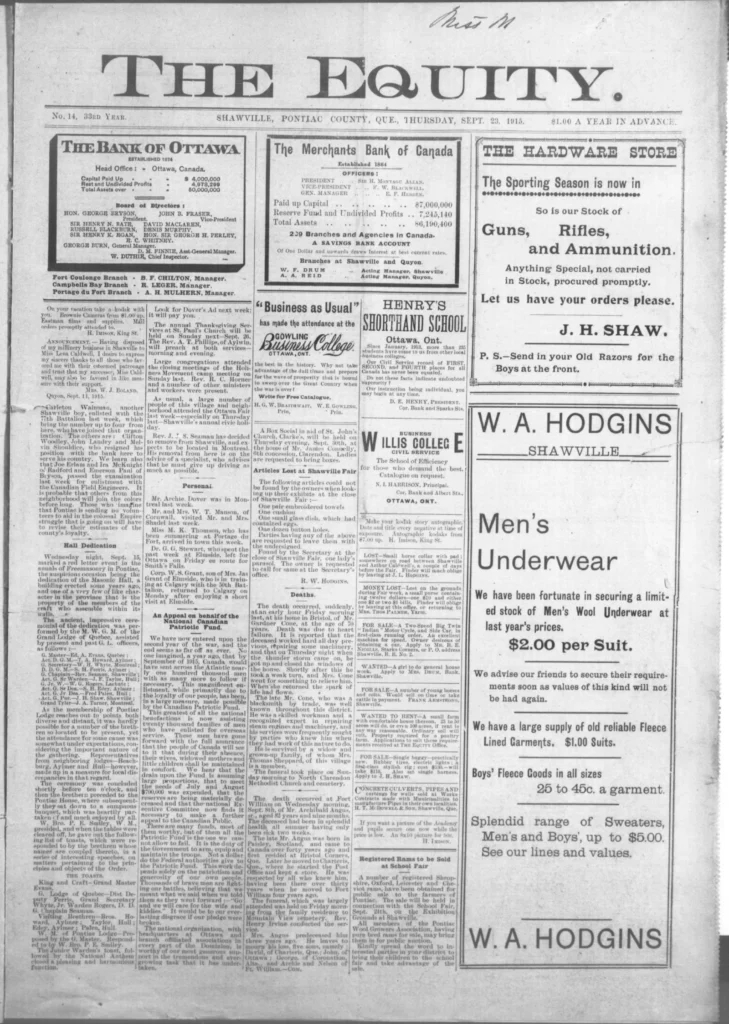
Summer came on strong that year — hot, dusty, and restless. The fields along the river shimmered in the heat, the horses worked harder than ever, and the sounds of threshing and hammering filled the days. There was no escaping the sense that the war had become the new order of things. It was everywhere now: in sermons, in advertisements, in the songs the schoolchildren sang.
By July, The Equity’s pages were thick with appeals. Buy bonds. Save flour. Knit faster. Send comforts to the men overseas. There were reports from the front, clipped from larger papers, describing battles so large and so terrible they almost defied imagination. Yet amid the horror, there was still pride — the quiet sort that came from seeing local boys mentioned in dispatches. Names like Armstrong, Hodgins, and Horner — familiar, local names that made faraway places like Flanders and Ypres feel close.
The community carried on in the only way it could: by doing. Fairs and socials doubled as fundraisers, their posters promising “good company and a patriotic purpose.” The women of the Red Cross held sewing days that lasted from morning until the light gave out, packing boxes with socks, bandages, and tins of jam. In Shawville, the rink committee handed over its surplus to the war fund, and the young men who might have been playing hockey the year before were now training with rifles instead.
Farmers faced their own battles. Labour was short, and every hand mattered. The Dominion government urged the use of machinery, but most couldn’t afford it, so neighbours worked together, trading time and horses. The Patriotism and Production slogan that had filled springtime editorials was put into practice in the heat of summer. If you couldn’t fight, you could at least produce.
There were moments of reprieve. Dominion Day brought a picnic at the fairgrounds, where speeches about duty mingled with laughter and fiddle music. Children ran races; veterans stood a little apart, smoking and listening. It felt almost normal for a few hours, until the band struck up “The Maple Leaf Forever,” and people stood still again, thinking of those who weren’t there to hear it.
Not all the news was patriotic. The casualty lists grew longer through July and August, and letters home hinted at worse to come. Some families received telegrams, short and merciless. “Killed in action.” “Missing.” “Severely wounded.” The kind of phrases that left rooms silent for days.
Still, life in the Pontiac didn’t stop. The hay had to be cut, the cows milked, the mail carried. The men at home bore the strain in silence, and the women shouldered the rest. When tempers flared in shops or at church, people blamed the heat, but everyone knew it was more than that — it was the strain of waiting, of pretending that everything was fine when it wasn’t.
By late August, the newspapers were reporting heavy fighting around Loos, and even the most optimistic editorials had begun to sound weary. Yet in the same issue, there might be a story about a successful garden competition or a new school opening — proof that life, somehow, refused to pause.
When the harvest finally came in, it was good — one of the best in years. The editors called it “a victory of the soil.” The phrase caught on, because it felt like something solid in a year that was anything but. The grain kept moving east, the letters kept coming back, and the war, like the summer heat, showed no sign of breaking.