The Great War ended, but the Pontiac that emerged in 1918 was a different place than the one that had answered the call four years earlier. The most painful change was the silence. When the casualty lists were printed in the pages of The Equity, they represented a permanent subtraction of the region’s future. Private Lee Hodgins is the starkest example of this; he was 14 years old when he was killed. At an age when he should have been learning the specific tilt of his father’s land, he was buried in Europe. Families across the Pontiac were left with empty chairs and farm acreage they no longer had the youth to work.
Survival on the home front fell to the women. The slogan “Men Must Fight—and Women Must Reap” became a grueling daily reality rather than a patriotic catchphrase. Wives and daughters moved out of the domestic sphere and into the fields to save the harvest. This shift in labor forced a change in technology, too. The mechanical milker and the motor truck were brought in because there were no hands left to do the work. These machines filled the physical gaps left by the soldiers, marking the beginning of an industrial era for the local farm.
This effort eventually broke the old political order. The government could no longer justify denying the vote to women who were essentially keeping the national economy from collapsing. Sir Robert Borden’s War Time Elections Act was a calculated acknowledgement of this debt, granting the ballot to the female relatives of men in service. It was the first time the state admitted that the contribution of a mother or a wife was a form of national service, setting a precedent that couldn’t be reversed.
However, the war also left a deep cultural fracture. The 1917 conscription crisis turned neighbors against one another, splitting the community along language and religious lines. For many in the Pontiac, the draft felt like a betrayal of the voluntary spirit. They saw it as the government overstepping its bounds. This resentment came to a head in the federal election of 1917. The region, once a Conservative bastion, shifted its weight entirely to vote against conscription.
The war gave the region the vote and the tractor, but it took a generation of its children to pay for them. The Pontiac survived, but the cost of that survival is still visible in the names on the cenotaphs and the shifted politics across the Ottawa Valley.
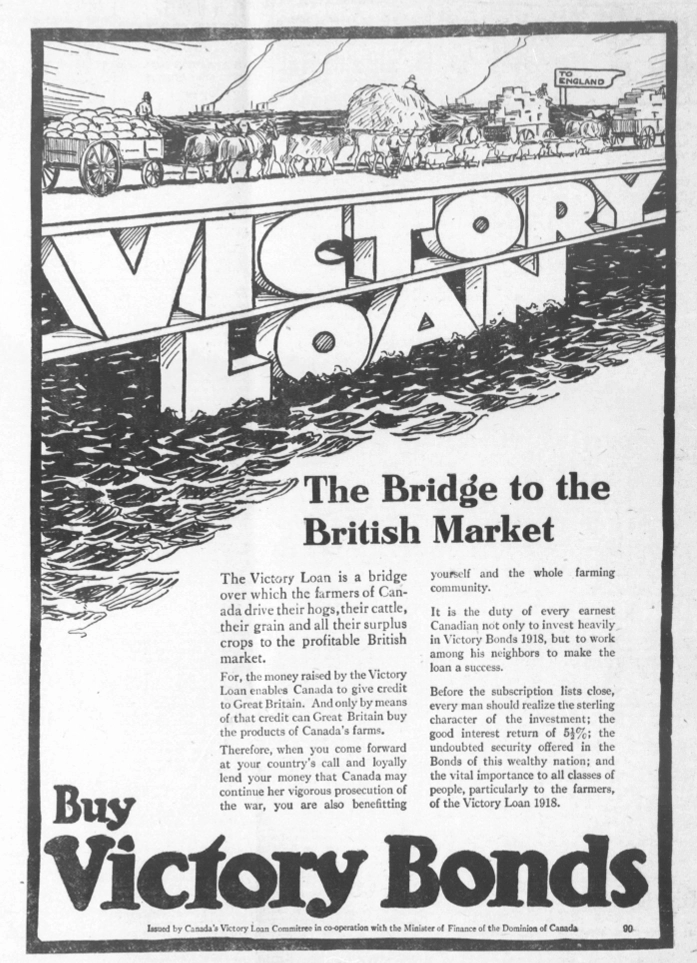
One of the last Victory Bonds ads to appear in The Equity, October 31, 1918.