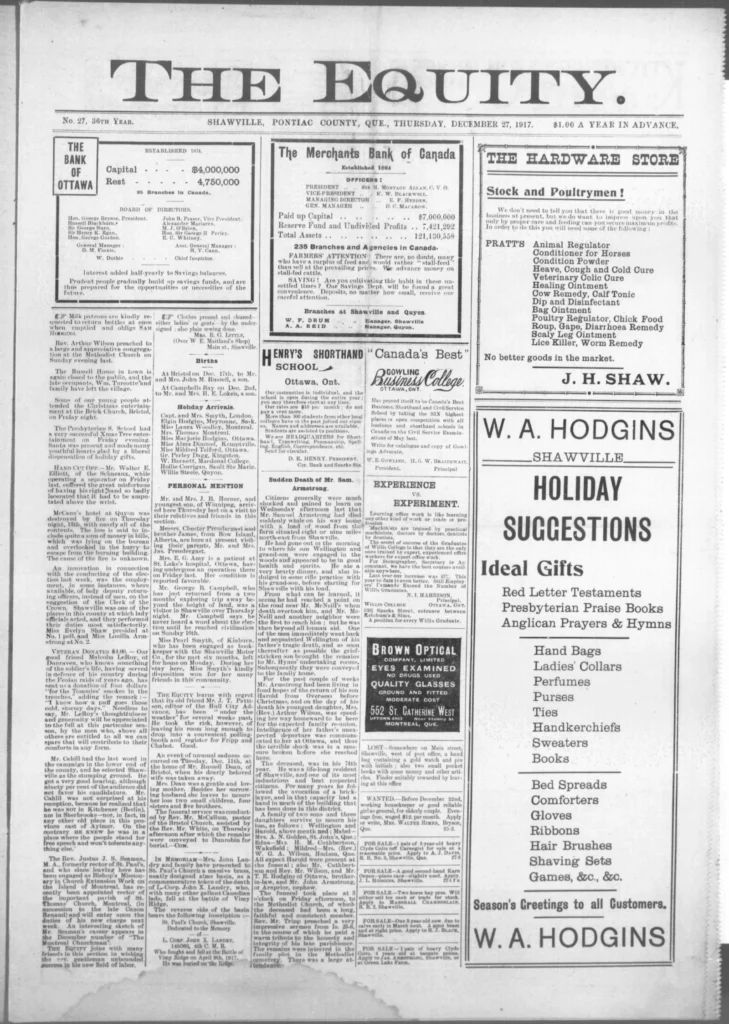
The late autumn and early winter of 1917 brought the Pontiac to a point of complete mobilization — a society transformed by war, divided by politics, and defined by endurance. In the pages of The Equity, the season appeared as a relentless convergence of duty, sacrifice, and fatigue.
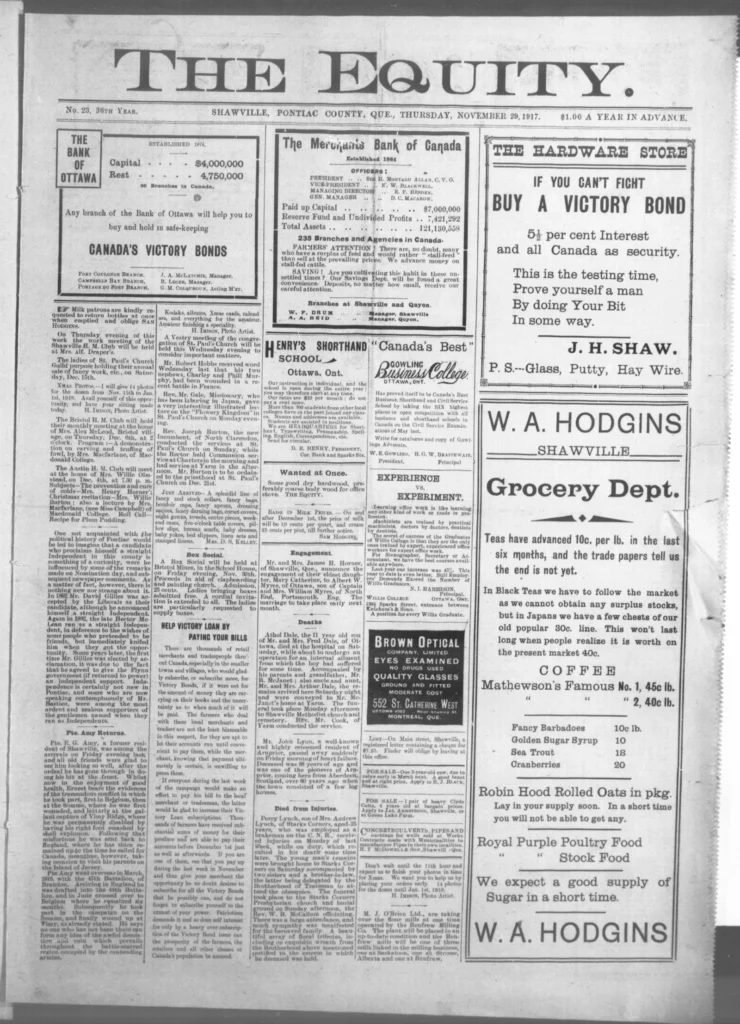
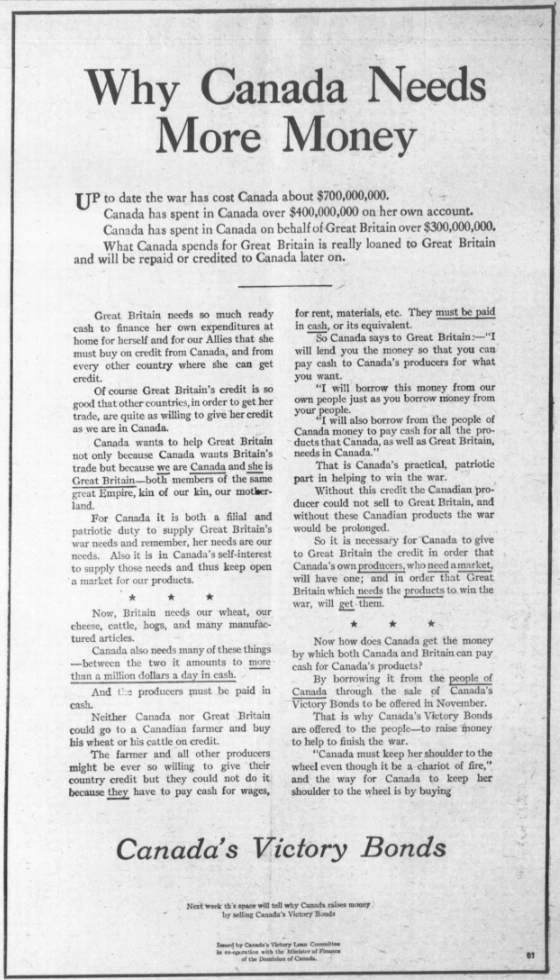
The Fourth Canadian Victory Loan campaign dominated the local headlines, urging every citizen — “man or woman, boy or girl” — to invest in the nation’s triumph. The campaign was framed not only as patriotic obligation but as economic necessity: Canada’s credit would sustain Britain’s capacity to purchase the wheat, livestock, and munitions that flowed from farms and factories across the Dominion. The call was unmistakable — “Every dollar is a bullet,” the editorials proclaimed — and Pontiac answered with determination, even as hardship deepened.

The connection between the front and the home front remained painfully vivid. The Equity’s weekly columns carried the familiar rhythm of loss, relief, and mourning. Reports described the wounding and decoration of Sergeant Harry McNally for conspicuous bravery at Lens, and the injuries suffered by Sergeant Smart, a Pontiac County native who had survived Ypres, the Somme, and Vimy Ridge before being struck down again.
News from the trenches was often harrowing. Private Neil Held and Private Stanley McDonald were both reported wounded, while Private Lester Lett of Dunraven was shot in the shoulder. The death of Private Wilmer C. Armstrong at the Somme stood as another stark reminder that victory, if it came, would be dearly bought. Dispatches from Europe painted scenes of desolation — the ruins of Arras, the churned mud of Paradise Wood — places that existed for readers only as names, but names now tethered to sons and brothers of Pontiac.
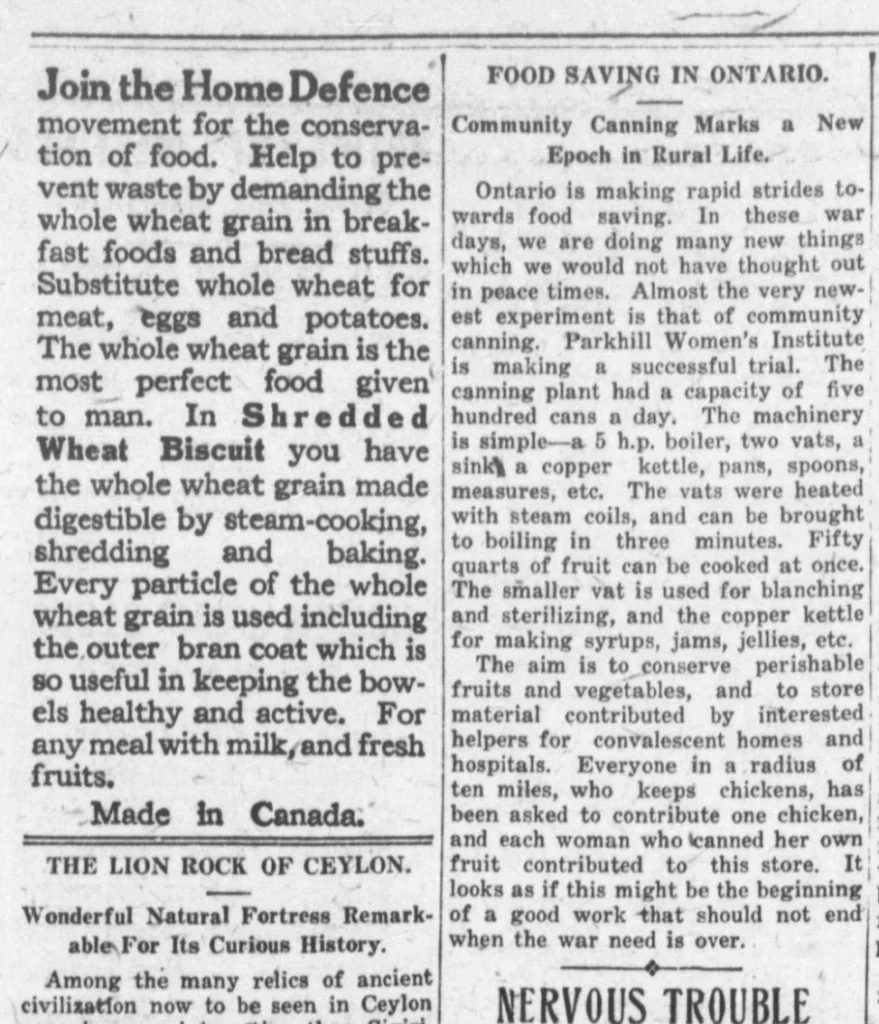
On the home front, conservation became a moral crusade. Wartime food control reached into every kitchen, shaping habits and values alike. The popular slogan, “Don’t stuff your husband — husband your stuff,” encapsulated both humor and hardship. Housewives were urged to replace wheat with barley or oats, and meat with beans or fish.
Local Homemakers’ Clubs gathered to study “Meat and Wheat Substitutes,” transforming ordinary domestic life into a campaign of patriotic economy. Editorials went so far as to declare that those who refused to conserve were “as dangerous as a swarm of German spies.” Agriculture carried the same patriotic charge: farmers were urged to increase production, diversify crops, and seize upon strong markets for wheat, pork, and wool. The war had turned rural life — once seasonal and local — into a global enterprise tied directly to the outcome in Europe.
Social change followed closely behind. Returned soldiers began to appear across the region, some hobbling on crutches, others bearing visible wounds of battle. Vocational programs were established to help these men retrain for civilian life, offering small but meaningful hope amid the wreckage of war. The presence of women in leadership — especially in Homemakers’ organizations and public committees — became more visible than ever, reinforced by the new wartime franchise that extended the vote to female relatives of servicemen.
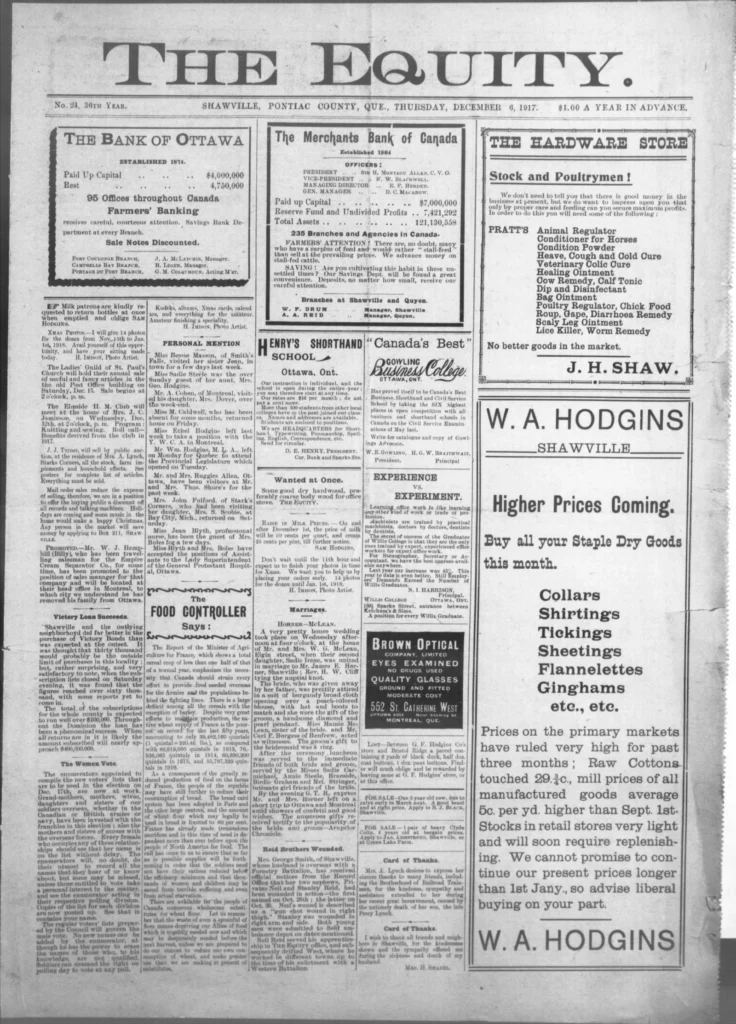
The Women Vote.
The enumerators appointed to compile the new voters’ lists that are to be used in the election on Dec. 17th, are now at work. Grand-mothers, mothers, wives, daughters and sisters of our soldiers overseas, whether in the Canadian or British armies or navy, have been invested with the franchise in this election; also the mothers and sisters of nurses with the overseas forces.
– The Equity, December 6, 1917
Yet beneath the outward solidarity, the strain of national division grew unmistakable. The enforcement of the Military Service Act — Canada’s conscription law — fractured loyalties across the country, and the Pontiac felt the tremors acutely. December’s federal election placed the issue at the center of every conversation.
Sir Robert Borden’s new Union Government rallied under the banner of national unity and victory at any cost, while Sir Wilfrid Laurier’s Liberals opposed conscription, arguing that forced service would tear the country apart.
In the largely English-speaking Pontiac, Unionist rhetoric found fertile ground. But farther west and south — in the francophone parishes near Fort-Coulonge and Quyon — sympathy leaned toward Laurier, mirroring the broader Quebec resistance to the measure. Reports of Union meetings disrupted in Quebec City and Montreal, and whispers of “pro-German sympathizers,” deepened the sense of alienation between the province’s two linguistic peoples.
1917 Election: Pontiac Candidates
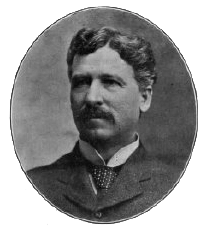
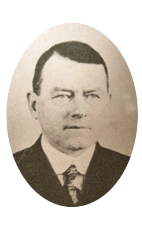
Frank Cahill’s October nomination immediately triggered a sharp rebuke from The Equity. Staunchly supportive of the Union Government and its Conservative candidate, the paper used its platform to challenge Cahill’s rhetoric from the outset, as seen in this October 25 editorial:
In referring to the Union Government recently formed at Ottawa, and which is regarded as one of the most important achievements in the annals of Canadian statecraft, Mr. Cahill declared it was a “frame-up,” designed for the sole purpose of “winning the elections.” Considering the personnel and the political antecedents of the men who have joined with Sir Robert Borden in making union possible, it is difficult to see where Mr. Cahill gets his ground for the assertion that a “frame-up” has been pulled off; howbeit, whether he is right or wrong in the further assumption that the alleged frame-up was put through with the object of winning the elections, it will not be very comforting or encouraging for him to realize, as he must, that Union Government along the broad lines laid down in Sir Robert Borden’s manifesto, recently issued, stands in the path which leads to victory.
– Editorial, The Equity, October 25, 1917
While The Equity had previously dismissed Cahill’s rhetoric as “cheap political clap-trap,” the election numbers revealed a massive shift in the Pontiac. The paper was forced to reckon with the fact that the district was no longer the English-speaking Conservative stronghold it once was. By framing the victory as a consequence of French-Canadian expansion rather than a political mandate, the editorial subtly cast the local result as an outlier—a case of Pontiac siding with the “Solid Quebec” movement of Sir Wilfrid Laurier, rather than the Unionist tide sweeping the rest of the Dominion.
The editorial reflected on this disconnect with a mix of surprise and demographic finger-pointing:
It must be remembered, though, that conditions have vastly changed since the old days. For federal purposes this electoral district now not only takes in the county of Temiscaming (exclusively French-Canadian) but also the new colony up along the Transcontinental railway… In keeping with the preconceived, yet mistaken notion that a ‘solid Quebec’ behind Sir Wilfred Laurier would place the reins of government in his hands again, the two sections mentioned readily fell into line in the general sweep.
– Editorial, The Equity, December 27, 1917
By year’s end, Pontiac County stood both united and divided — united in sacrifice, divided in sentiment. The Fourth Victory Loan had met its quota; the Union Government had won the war election; yet the cost was a fractured national spirit and a province at odds with itself. The sense of triumph was tempered by grief and disillusionment, as families welcomed home the wounded even while mourning those who would never return.
As 1918 approached, the promise of final victory loomed — but so too did the question of what kind of country would emerge once the guns fell silent.
Soldiers Mentioned in The Equity
These names have been extracted from copies of The Equity by AI and may have mistakes. Please let us know if you catch any at jon@theequity.ca.
| Mentioned | Soldier / Personnel | Status / Details |
|---|---|---|
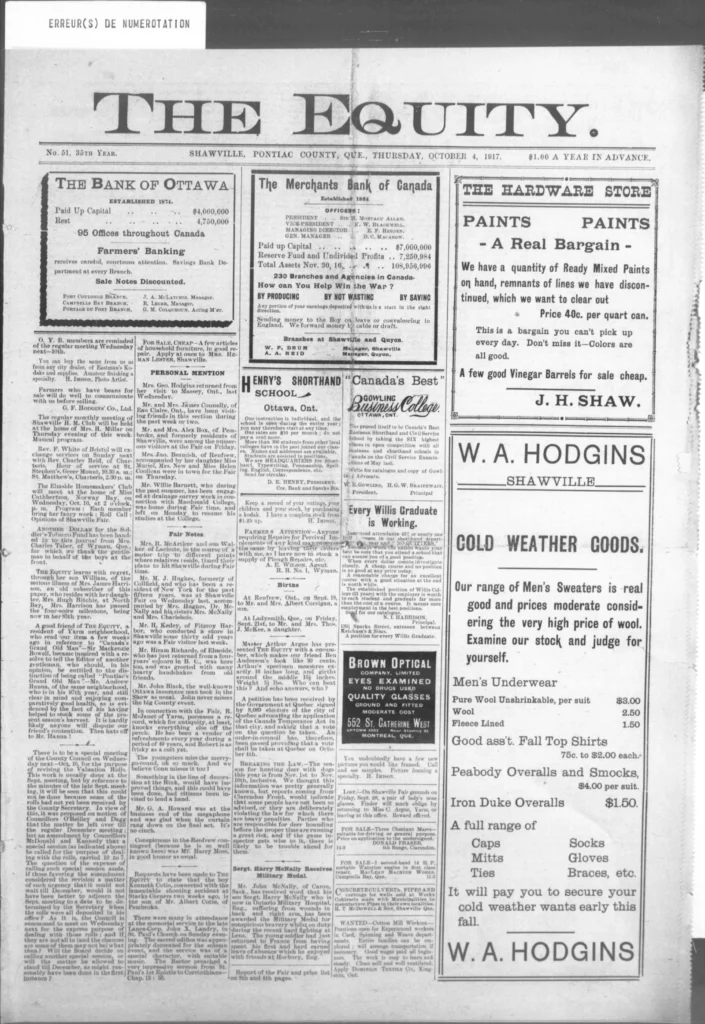
| Oct 4 / Dec 13 | L-Corp. John N. Landry | Killed in action at Vimy Ridge. |
| Oct 4, 1917 | Sergt. Harry McNally | Wounded in back and right arm; awarded the Military Medal. |
| Oct 4, 1917 | Staff Sergt. Ed. E. Kelley | Currently convalescing from wounds received in service. |
| Oct 4, 1917 | Jack Lumsden | Serving with the Y.M.C.A.; previously enlisted with the 6th Field Artillery. |
| Oct 4, 1917 | Major Owen | Deceased; received a posthumous decoration. |
| Oct 4, 1917 | Major Douglas Hamilton | Serving; noted for perfecting a device to be used against submarines. |
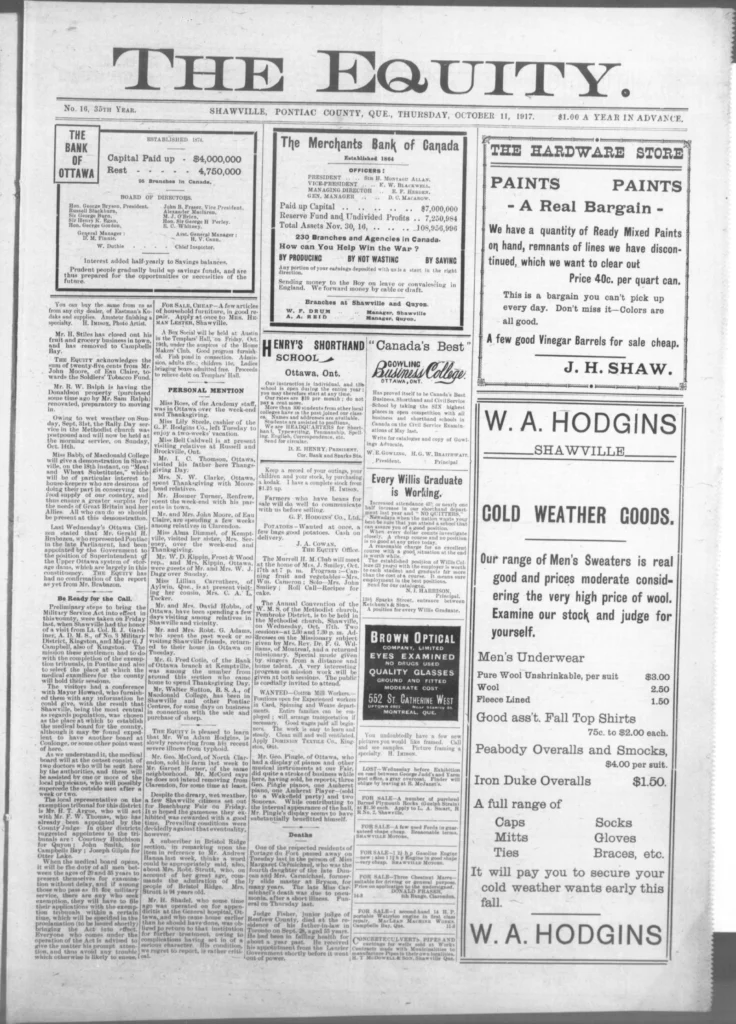
| Oct 11, 1917 | L-Corp. Locquell | Reported as currently serving. |
| Oct 18, 1917 | Sergt. H. Smart | Reported as wounded in action. |
| Oct 18, 1917 | E. Smart | Wounded at the Battle of Ypres; currently serving as a railway mail clerk. |
| Oct 18, 1917 | Trooper Potts | Wounded; awarded the Victoria Cross for saving a comrade. |
| Oct 18, 1917 | Private Andrews | Listed among the wounded. |
| Oct 18, 1917 | Sergt.-Maj. Stubbing | Reported as serving on night duty. |
| Oct 18, 1917 | Gnr. William MacLean | Serving; awarded the Military Medal for bravery. |
| Oct 18, 1917 | Lieut. Herald D. Murphy | Wounded and captured by enemy forces. |
| Oct 18, 1917 | Major G. B. Murphy | Reported as currently serving. |
| Oct 18, 1917 | Pte. Duncan R. Draper | Reported as killed in action in France. |
| Oct 25, 1917 | Lieut. John Argue | Serving in forestry operations in England. |
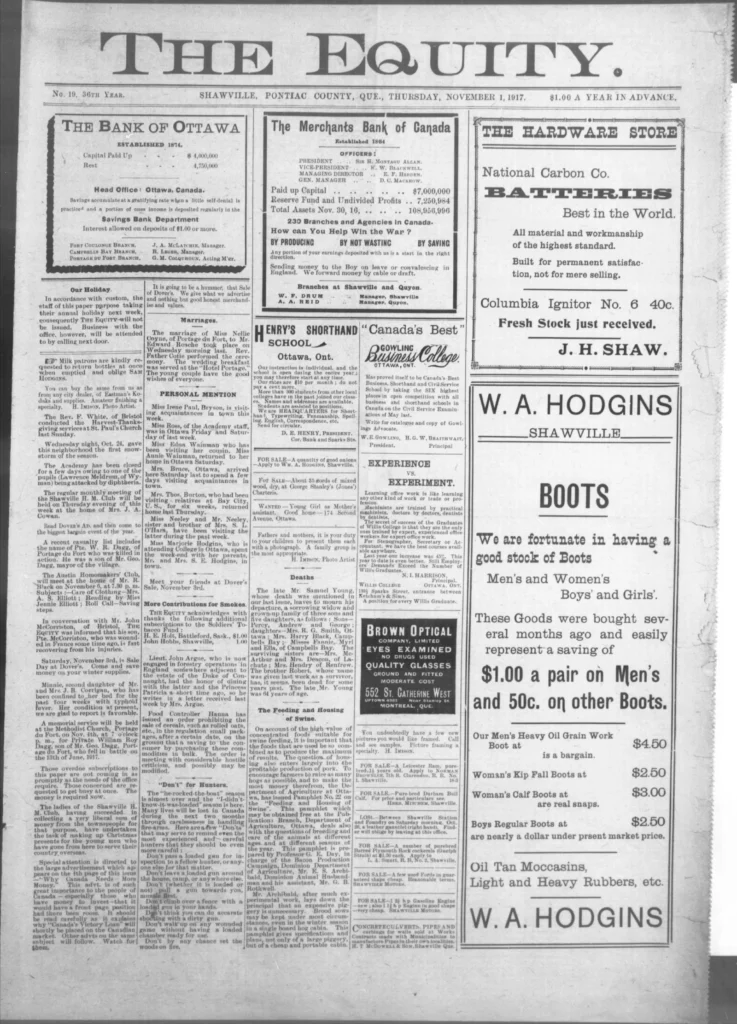
| Nov 1, 1917 | Lieut. C. E. | Serving; awarded the Military Cross. |
| Nov 1, 1917 | Capt. Giulio Laureati | Serving in the Italian Air Service. |
| Nov 1, 1917 | Lieutenant Marchal | Serving in the French air forces. |
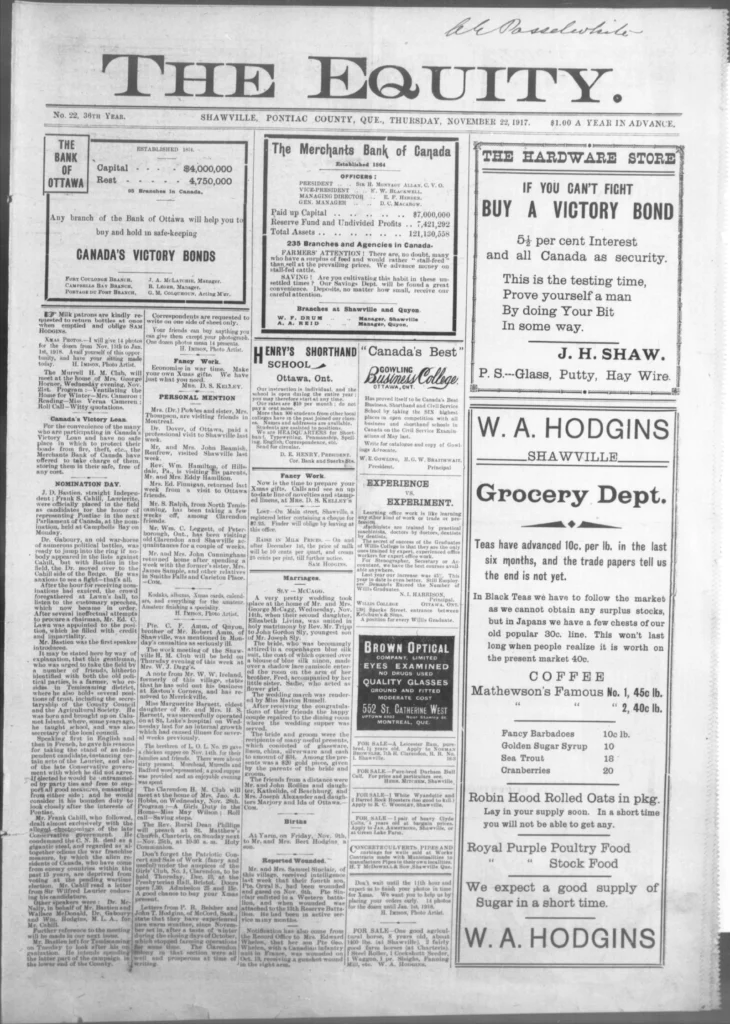
| Nov 22, 1917 | Pte. C. F. Amm | Reported as being seriously ill. |
| Nov 22, 1917 | Pte. Geo. Whelen | Wounded in action (right arm). |
| Nov 22, 1917 | Flt. Sgt. Alexander Boyd | Prisoner of War; sentenced to imprisonment by his captors. |
| Nov 22, 1917 | V-Adm. William S. Sims | Serving in command of American naval forces. |
| Nov 22, 1917 | Sgt.-Sniper W. J. Carey | Returned to Canada for medical treatment. |
| Nov 22, 1917 | General Maude | Deceased; died from illness and campaign hardships. |
| Nov 22, 1917 | Private Smith | Reported as currently serving. |
| Nov 22, 1917 | Private Cameron | Reported as killed in action. |
| Nov 22 / Dec 6 | Col. Herbert Mackie | Serving; elected as a Unionist candidate. |
| Nov 22, 1917 | Lt.-Col. White | Serving overseas with a Forestry battalion. |
| Nov 29, 1917 | Pte. E. G. Amy | Permanently disabled; returned home to Canada. |
| Nov 29, 1917 | Private Lester Lett | Wounded in action for the second time. |
| Nov 29, 1917 | Pte. Ernest Finan | Serving; currently departing for duty. |
| Nov 29 / Dec 20 | F-M. Sir Douglas Haig | Reported as currently serving. |
| Nov 29, 1917 | Lieut. C. M. Bayne | Reported as killed in action. |
| Nov 29, 1917 | Col. E. D. Swinton | Serving; credited as the "father of the tank." |
| Nov 29, 1917 | L-Corp Keep | Listed in the military roll. |
| Nov 29, 1917 | Pte. J. K. Shepherdson | Listed in the military roll. |
| Nov 29, 1917 | Pte. J. T. Harris | Listed in the military roll. |
| Nov 29, 1917 | Lieut. Bruce Leitch | Deceased; reported as a domestic murder victim. |
| Nov 29, 1917 | Arthur Shaw | Reported as currently serving. |
| Nov 29, 1917 | Claude Shaw | Wounded, but recently returned to France for duty. |
| Dec 6, 1917 | Private Neil Reid | Wounded in action (right thigh). |
| Dec 6, 1917 | Private Stanley Reid | Wounded in action (right arm and side). |
| Dec 6, 1917 | Rev. Wilmer C. Armstrong | Reported as killed in action at the Somme. |
| Dec 13, 1917 | Pte. Stewart Crawford | Listed among those wounded in action. |
| Dec 20, 1917 | Pte. Frank E. Armstrong | Reported as killed in action in France. |
| Dec 27, 1917 | Private Reynolds | Reported as currently serving. |
| Dec 27, 1917 | Private Henry Morgan | Reported as currently serving. |
| Dec 27, 1917 | Flt. Lieut. Guynemer | Shot down and killed in action. |
| Dec 27, 1917 | Captain von Richtofen | Reported as seriously wounded. |
| Dec 27, 1917 | Lieutenant Werner Voss | Shot down and killed in action. |
| Dec 27, 1917 | Flt. Lieut. Wisseman | Reported as killed in action. |
| Dec 27, 1917 | General Petain | Reported as currently serving. |
| Dec 27, 1917 | Lt. Col. C. Crewe Read | Reported as having recovered from illness. |
| Dec 27, 1917 | Ben Carey | Reported as killed in action in France. |
Listen to our Podcast!
We’ve used Artificial Intelligence to summarize what was covered in The Equity during this part of the Great War. Click the play button to listen.
Timelines: October - December 1917
Below are the original copies of The Equity from this part of the War. Click any of them to download a PDF copy.