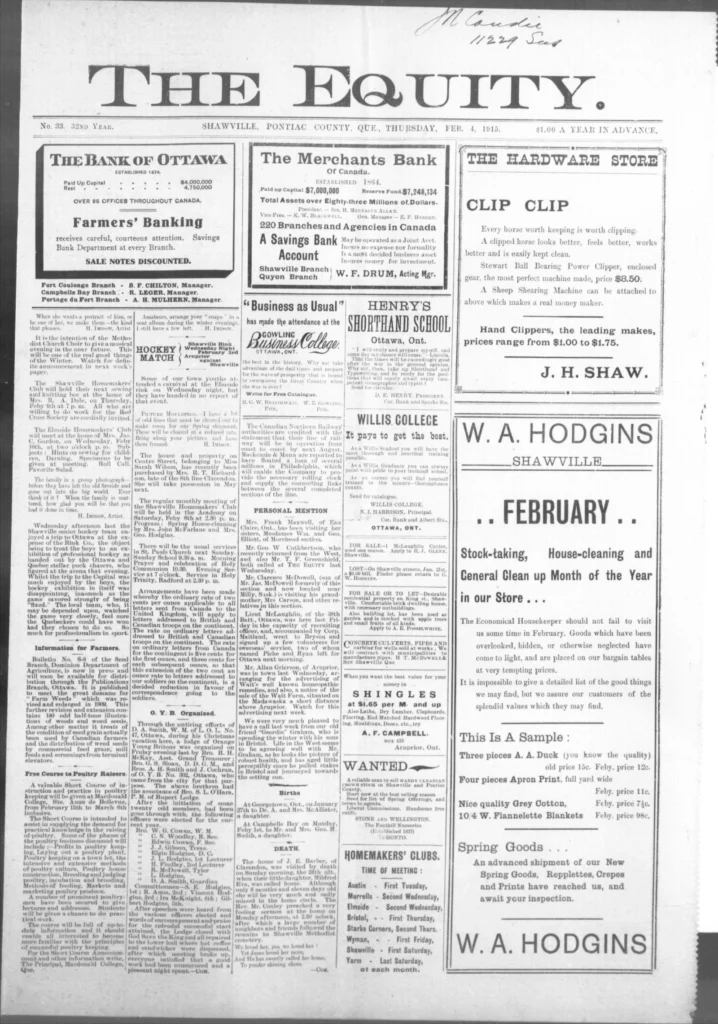
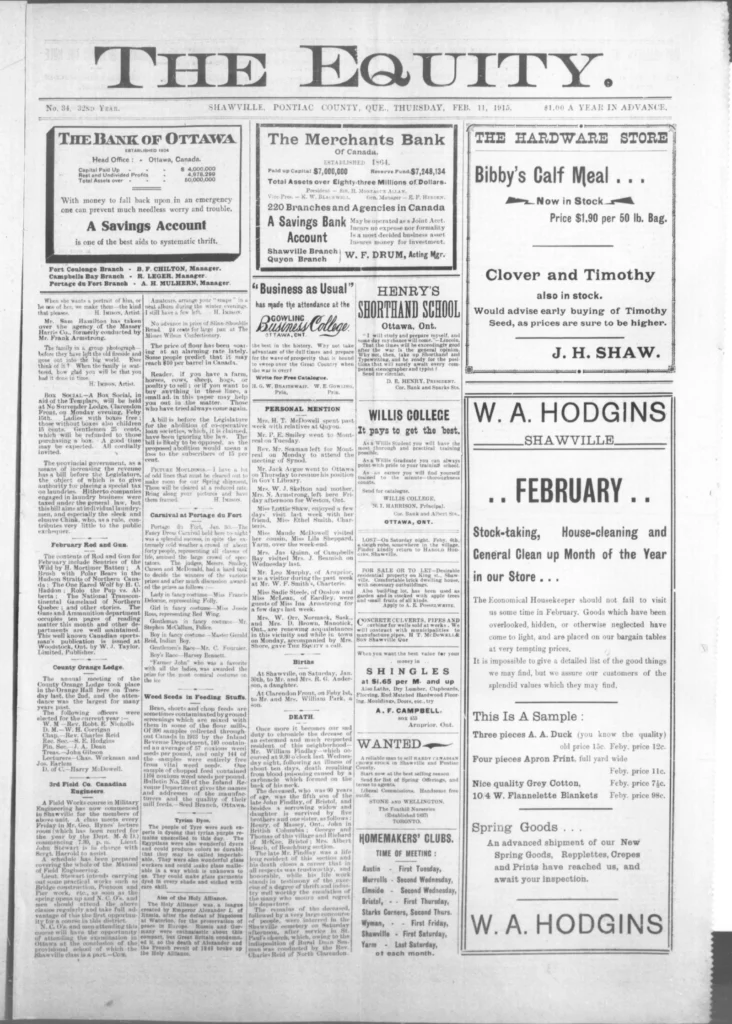
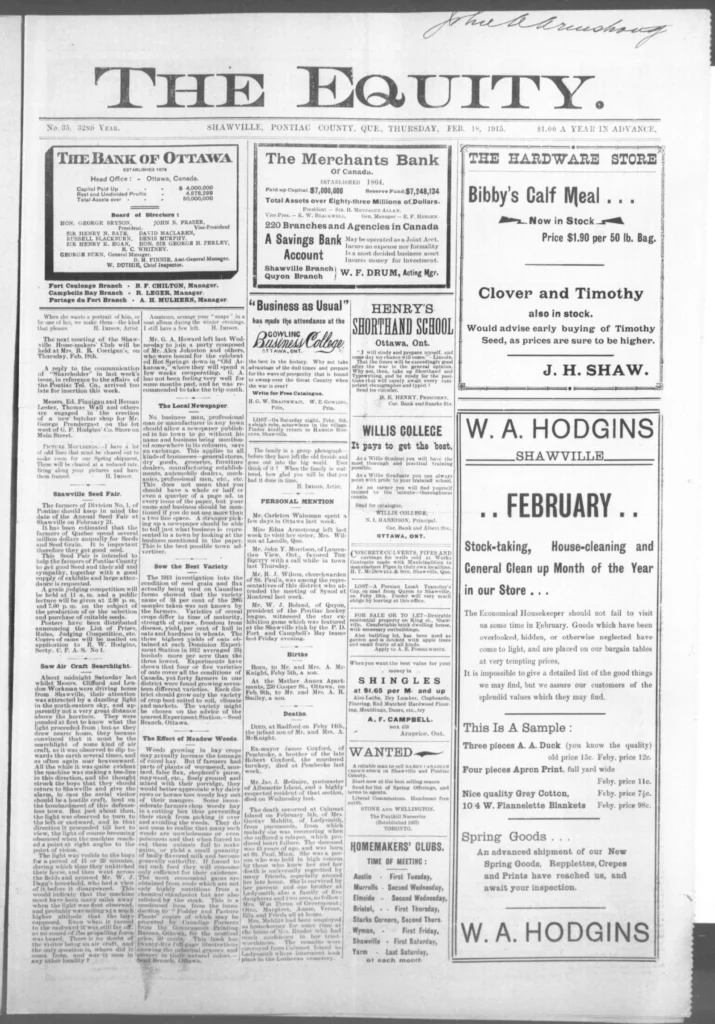
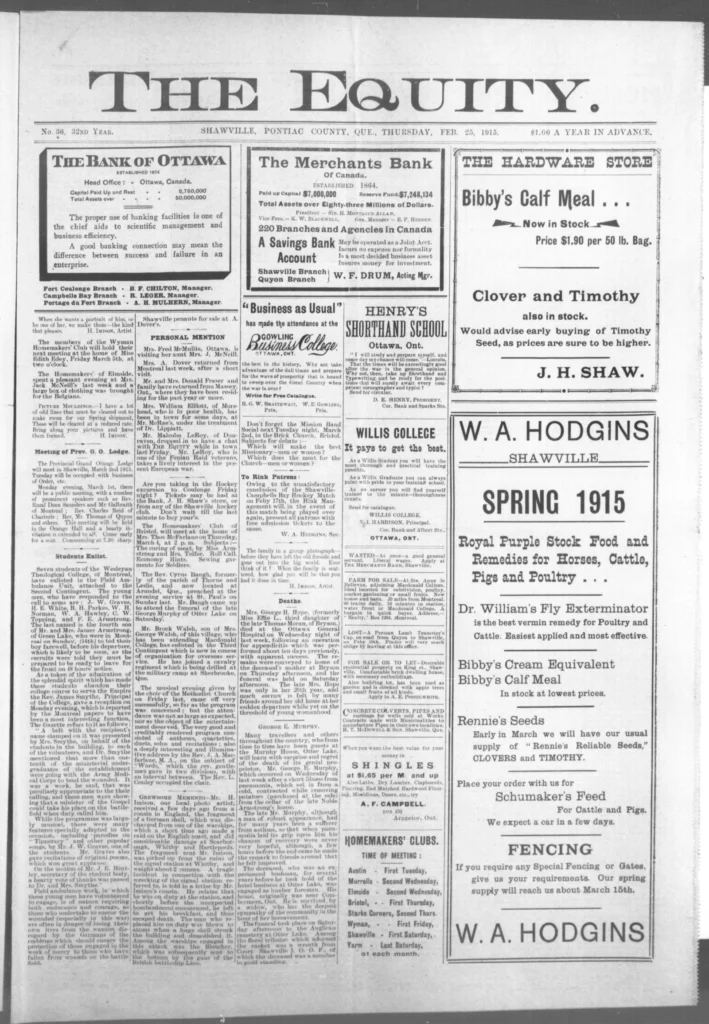
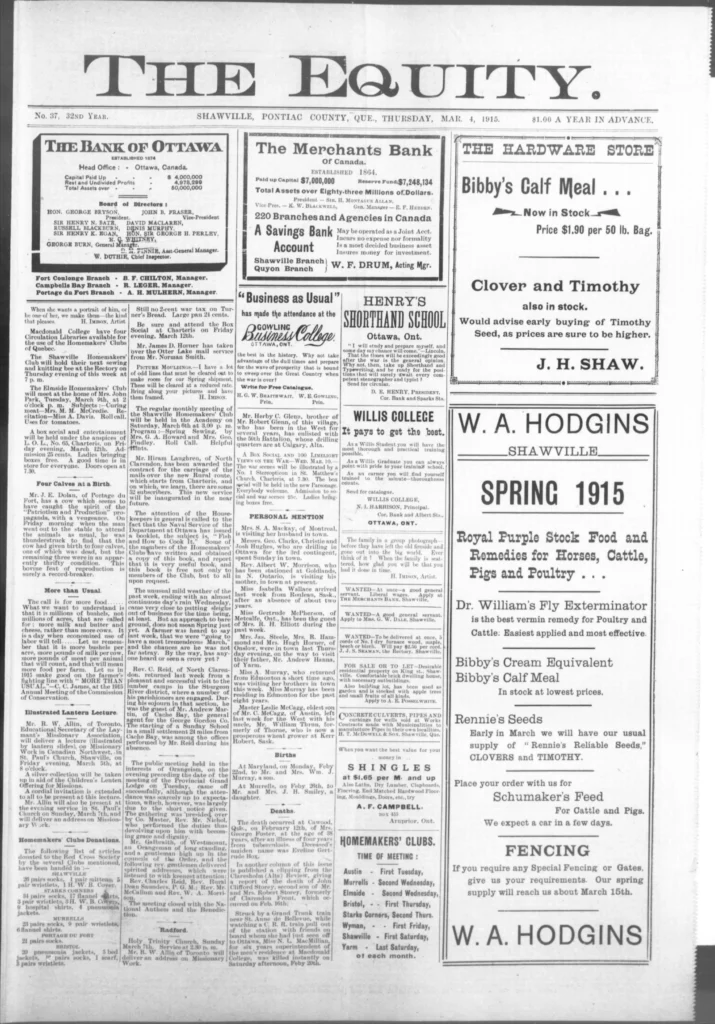
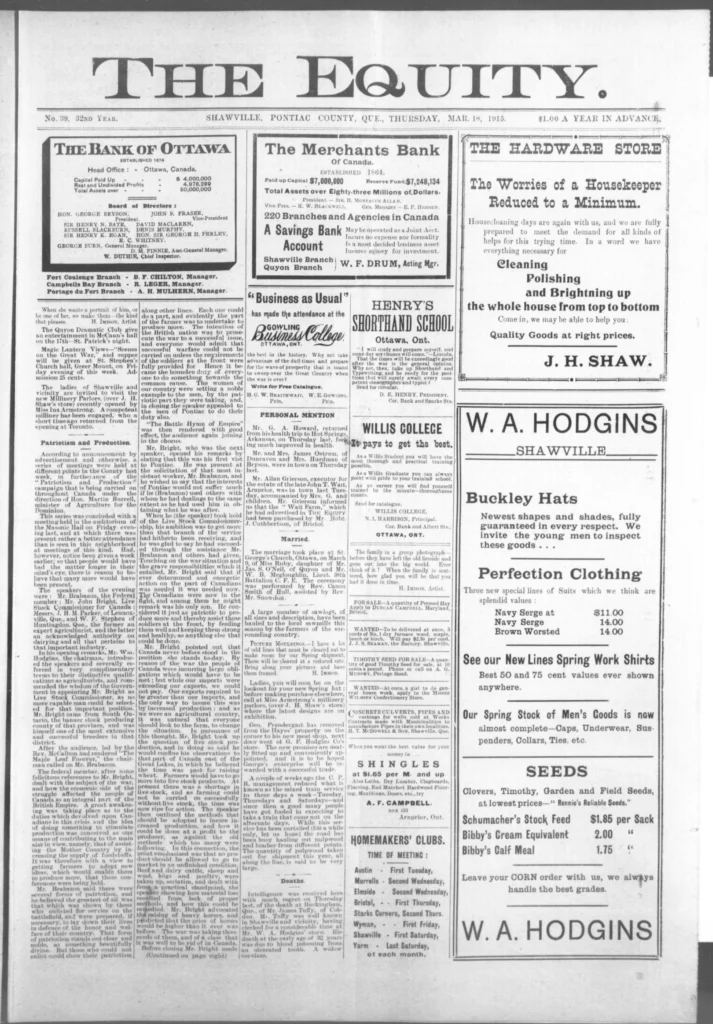
In the pages of The Equity, there were still the ordinary notices: the price of butter and pork, the church socials, the seed fairs. But around them, small hints of weariness began to appear. A few editorials warned that the government’s pensions for wounded soldiers were pitiful — “barely three dollars a week,” one wrote, “a pittance for those who have given everything.” That quiet anger ran under the surface of patriotism like an undertow.
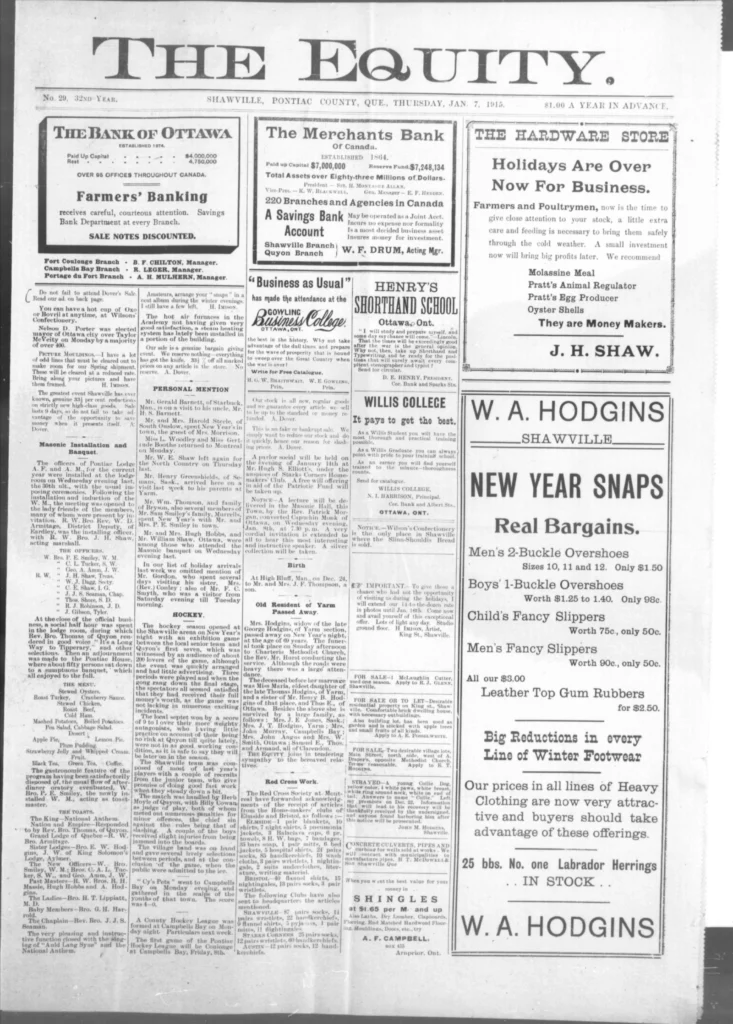
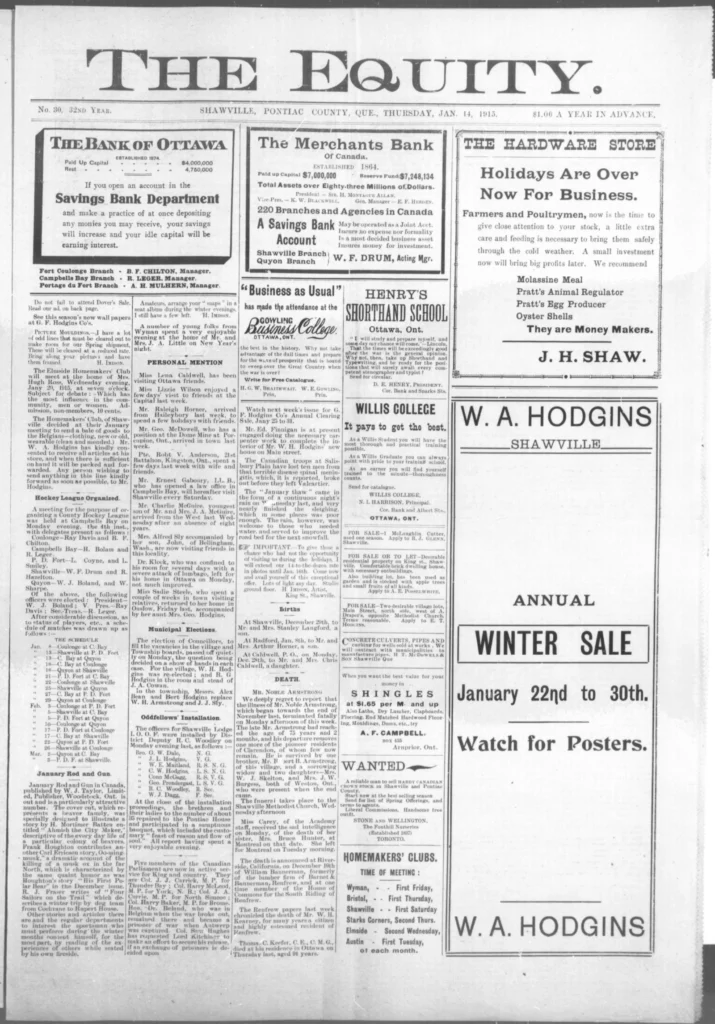
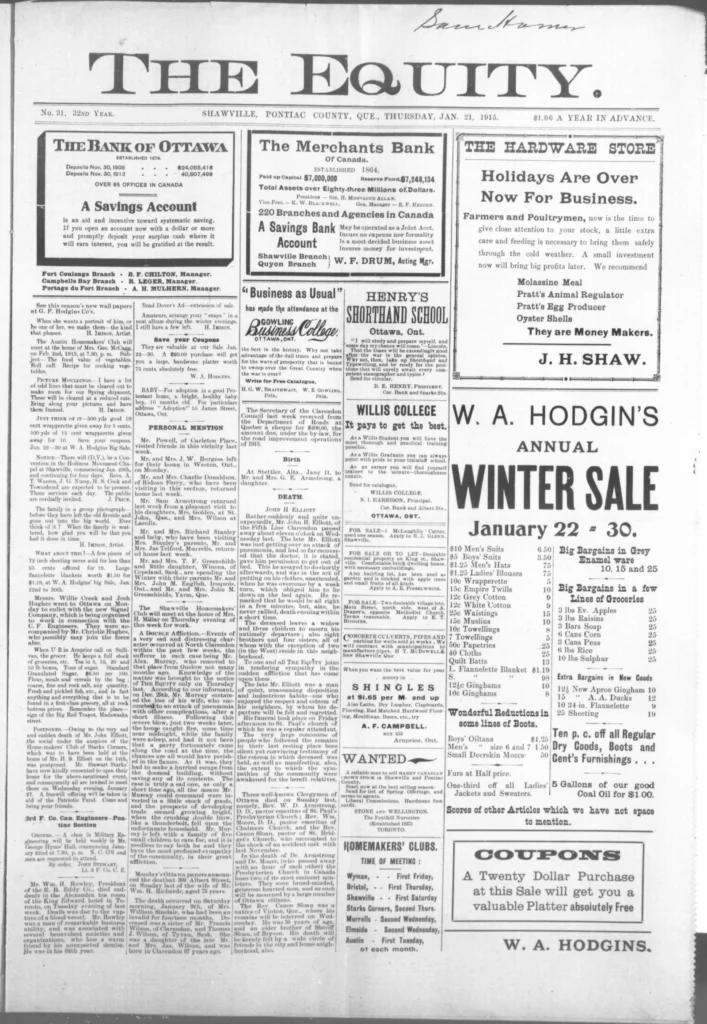
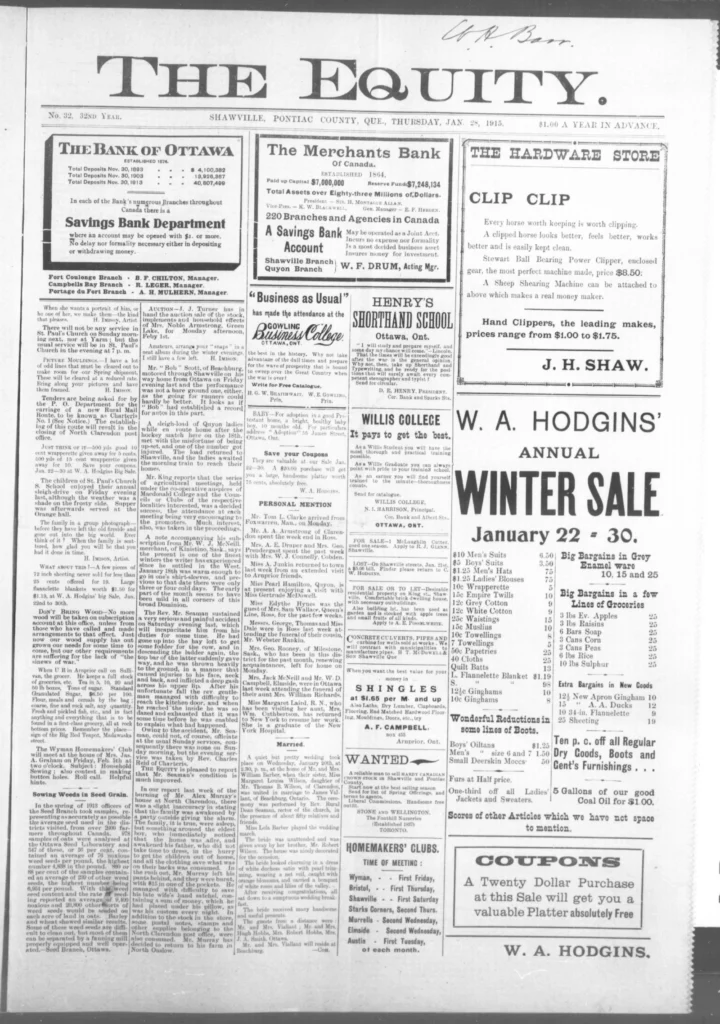
The women of the county held things together. Homemakers’ Clubs met in kitchens and church halls to sew socks, roll bandages, and trade tips on saving sugar or mending coats. In Starks Corners, they raised fifty-three dollars in one evening for the Patriotic Fund — with even the local German Legion contributing two dollars, a small reminder that the war’s lines were drawn overseas, not here at home.
Still, beneath the local unity, you could feel the edges fraying. Editorials started to take aim at Quebec’s politicians, accusing them of dragging their feet on financial bills or showing too little loyalty to the Empire. The words were sharp, even bitter. Yet in day-to-day life, French and English neighbours still traded milk and grain, shared fences and markets. Whatever arguments raged in Parliament, people here were too busy trying to keep families fed.
On cold February nights, you could see the war reflected in small, eerie ways. One evening, a light swept across the horizon — some swore it was a searchlight from an airship, others thought it was nothing more than moonlight on low clouds. But for a moment, it spooked the town. If Europe could burn, why not here too? The fear passed, but the feeling stayed: the world was smaller now, more dangerous than before.
By late winter, The Equity carried a simple slogan in the banking pages — “Business as Usual.” It was meant as reassurance, but also as instruction. Keep working. Keep faith. Do what you can. The war had stopped feeling like a storm that might pass. It had become the weather itself — cold, steady, and everywhere.