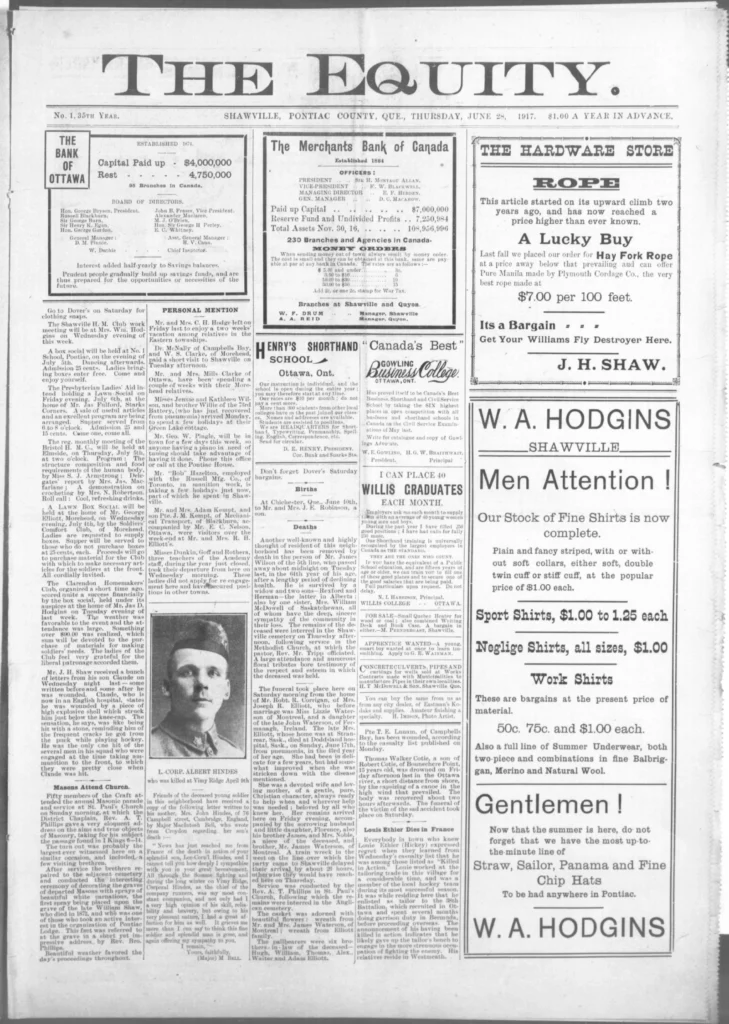
The opening months of 1917 brought the Pontiac into the most difficult phase of the war yet — a time when pride, grief, and division all lived side by side. The headlines in The Equity were dominated by news from the front, where Canadian troops had achieved a stunning victory at Vimy Ridge. The triumph was heralded across the Dominion as proof that Canada had come of age on the world stage. Yet behind the jubilation lay unbearable loss. The casualty lists grew longer each week, bringing the cost of that victory to the very heart of the community. Families scanned the pages anxiously, searching for familiar names, knowing that each new success overseas was won with lives from towns like Shawville, Quyon, and Clarendon.
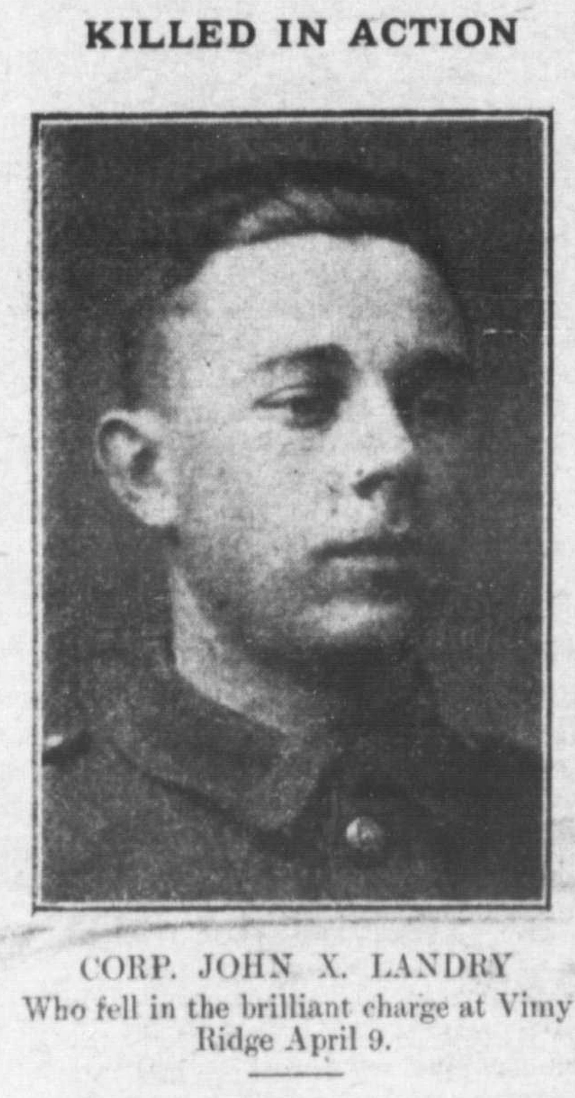
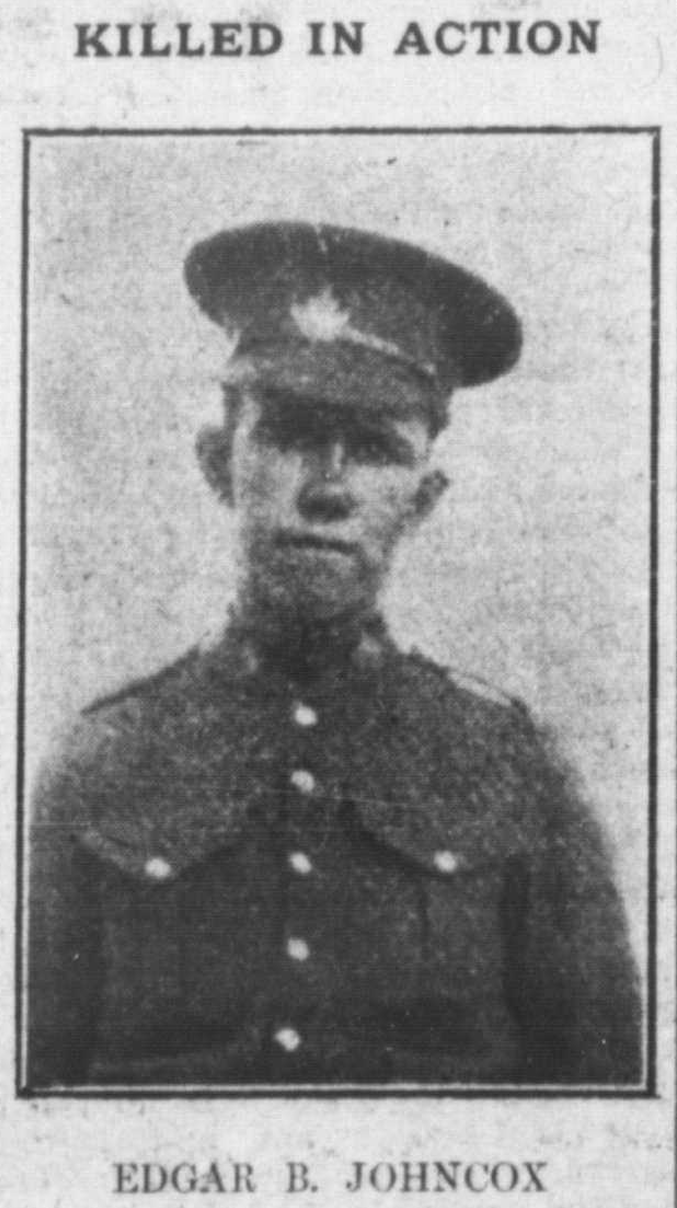
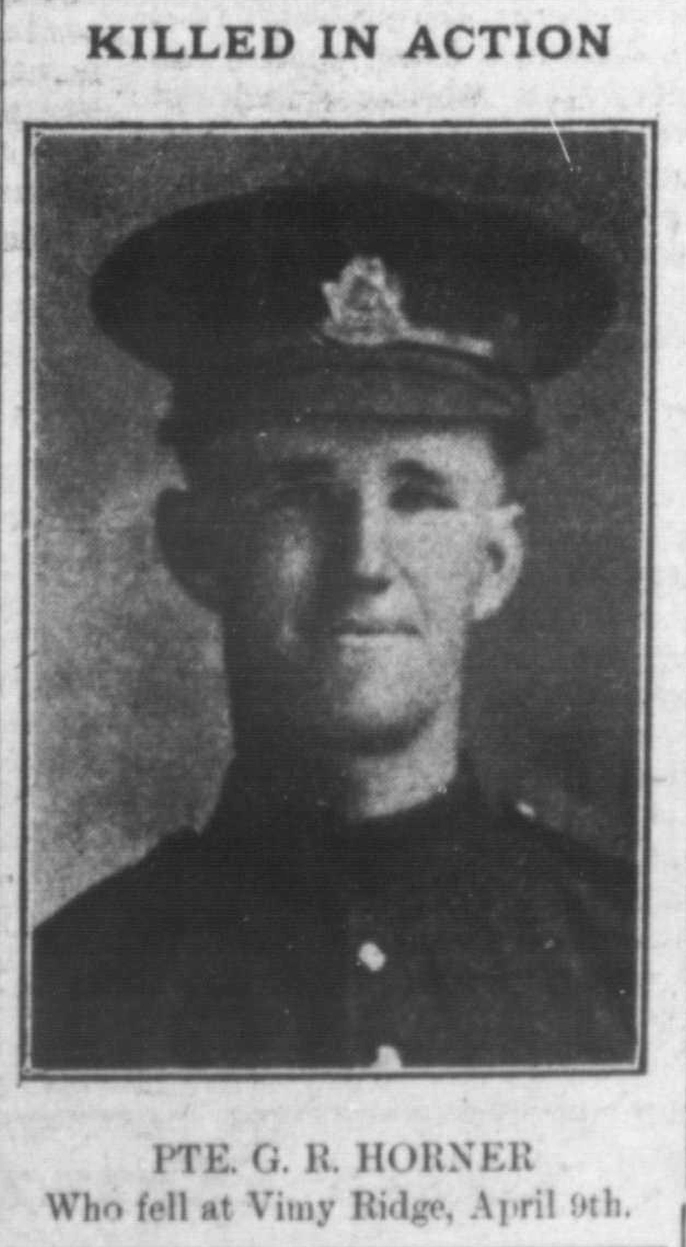
AI restorations of Corp. John X. Landry, Edgar B. Johncox, and Pte. G. R. Horner. All three perished at Vimy Ridge. Published in The Equity, May 31, 1917.
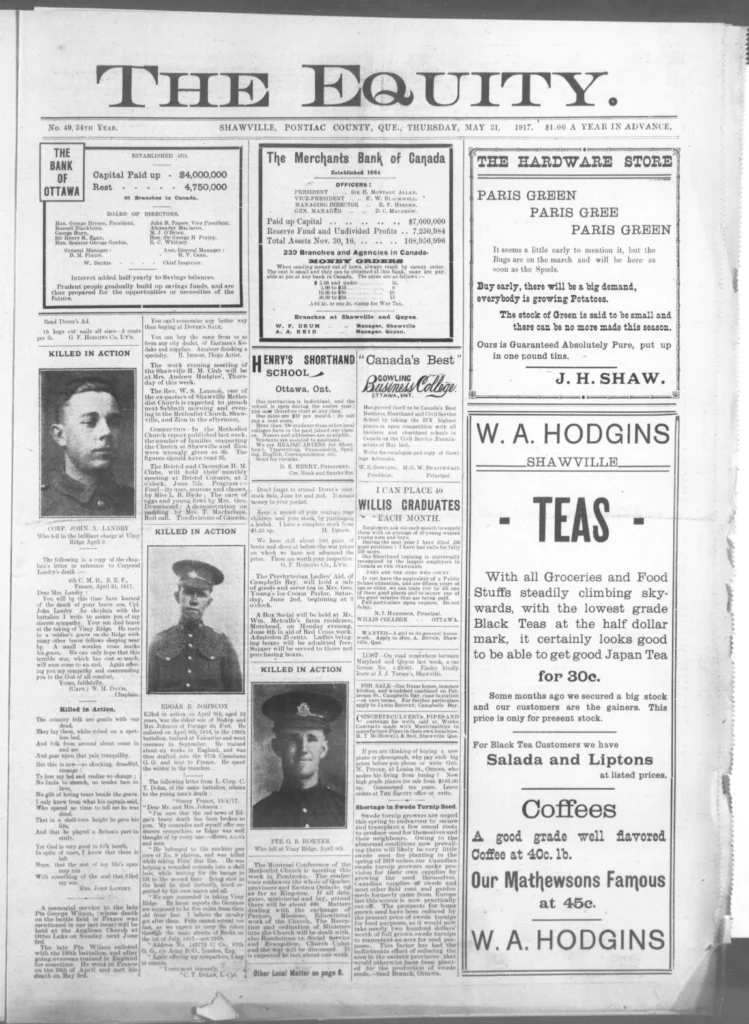
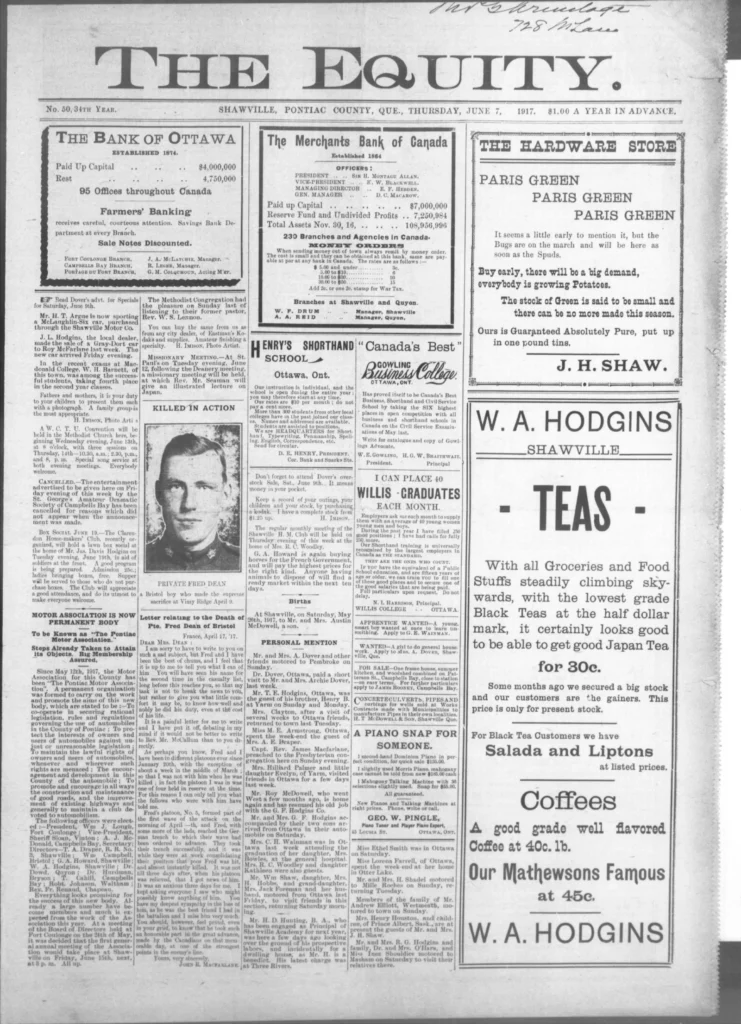
The war’s toll was deeply personal. Several Pontiac men fell during the assault on Vimy Ridge on April 9th — Lance-Corporal John Landry, Private Edgar B. Johncox, Private Fred Dean, and Private J. Galloway among them. Their deaths were recorded in the same issues that carried notices of the wounded: Private Elton Howard, struck by shellfire; Mrs. Norman Smith’s husband, grievously injured in both knees.
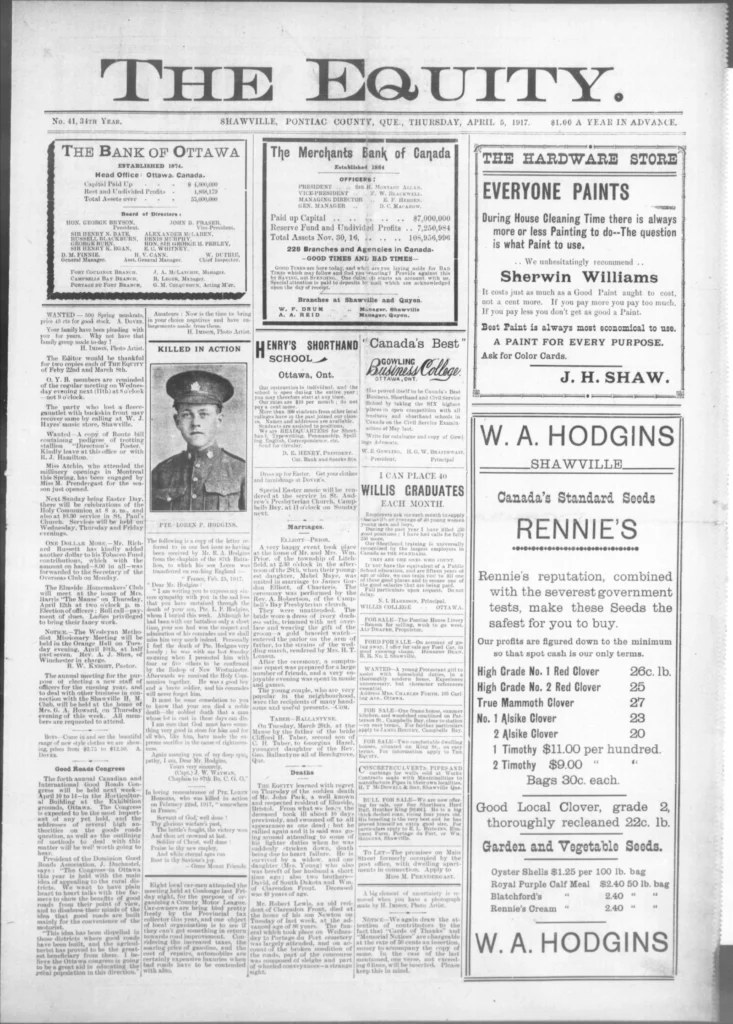
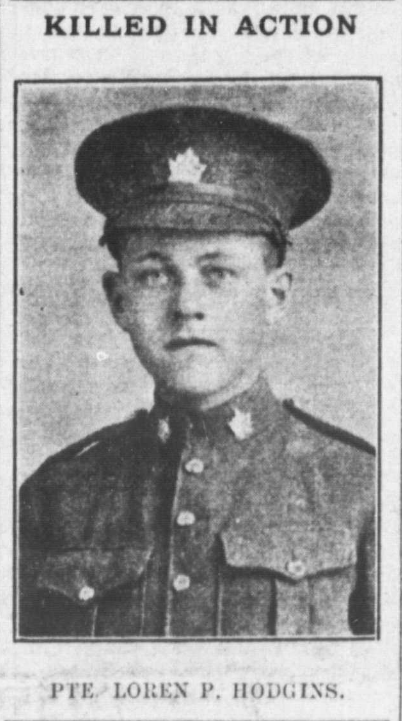
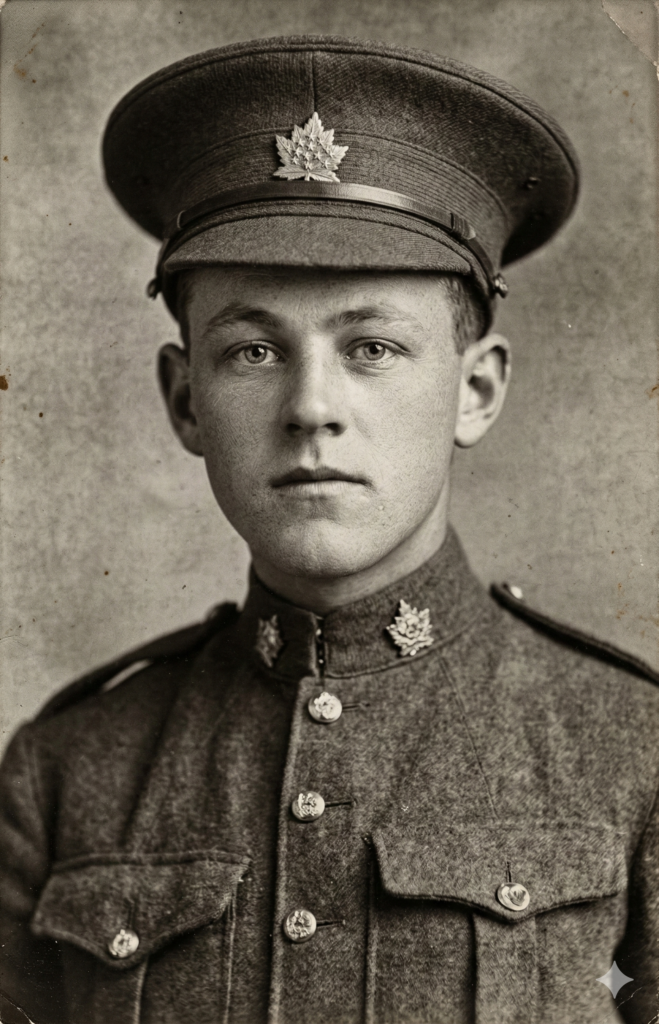
Earlier, in February, the community had mourned the loss of Private Lorne P. Hodgins, one of many young men transferred to front-line duty in the bitter winter months. Letters from overseas conveyed both tragedy and tenderness — a chaplain’s note offering condolences to the Hodgins family, and another from Lance-Corporal Harold Armstrong describing a “close shave” during a trench raid. In one haunting story, a local soldier wrote of finding his brother’s grave, having believed him merely wounded. Such moments revealed the emotional distance — and closeness — that defined the war: death and duty intertwined, carried across oceans in envelopes.
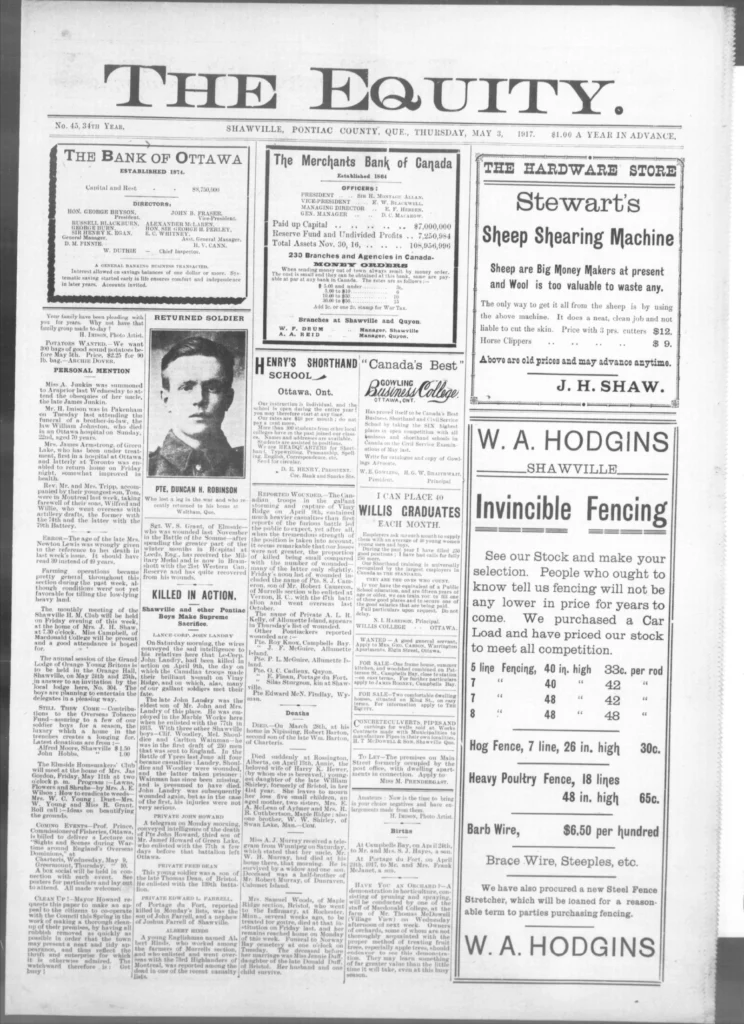
While many families were left to process the finality of a telegram, others prepared for a different kind of homecoming—one marked by both relief and the visible scars of combat. Among those returning to the Pontiac was Private Duncan B. Robinson of Waltham, who arrived back in the community after losing a leg during his service on the front line. His return served as a living testament to the violence of the European trenches, shifting the abstract news of distant battles into a tangible, daily reality for his neighbors. Though he had survived the “close shaves” and heavy shelling that claimed so many of his comrades, Robinson’s sacrifice was a permanent reminder that the price of service was often paid in more than just lives; it was paid in the altered futures of the young men who managed to make it back to the valley.
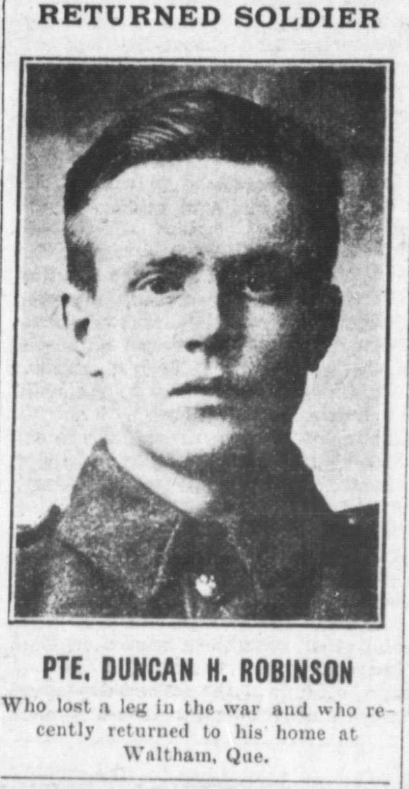
AI recreated photo of Pte. Duncan B. Robinson and original from The Equity, May 3rd, 1917.
On the home front, life continued through effort and generosity. Homemakers’ Clubs in Austin, Clarendon, and other villages took up the call to raise funds for Red Cross supplies, holding socials, teas, and raffles to send aid and comforts overseas. Donations to the Soldiers’ Tobacco Fund appeared regularly in the paper, a reminder that even a simple cigarette could offer brief relief in the trenches. These acts of care, often led by women, kept the connection between the Pontiac and its sons abroad alive. Yet economic strain was becoming impossible to ignore. Prices for basic goods climbed to record highs — even the cheapest tea now cost fifty cents a pound, flour reached ten dollars a barrel, and wheat hovered near two dollars per bushel. Families tightened their budgets, finding thrift not just virtuous but necessary.
For farmers, production was both a patriotic duty and an economic lifeline. Editorials urged “the utmost effort to increase the food supply,” with practical advice on potatoes, crop rotation, and seed preservation. The global shortage of European imports even affected local cheesemakers, who were again called to use traditional rennet methods. In the sawmills, labor shortages grew dire; men were wanted everywhere, and women increasingly stepped into roles once reserved for men. Across Canada, and within Pontiac, the presence of women in offices, banks, and factories became a new and lasting feature of wartime society. Meanwhile, local enterprise continued to adapt — new companies were incorporated, improvement projects launched, and even modest industrial tariffs published — though railway congestion made business increasingly difficult.
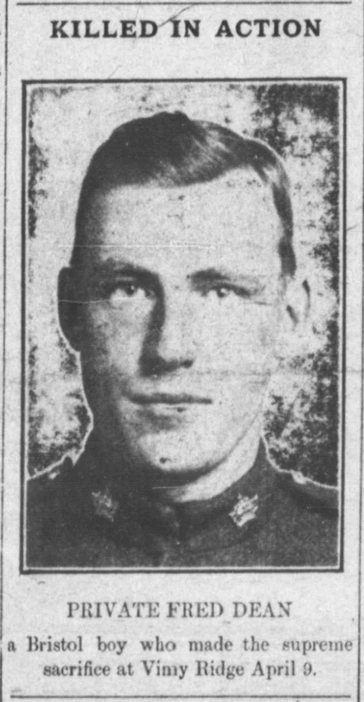
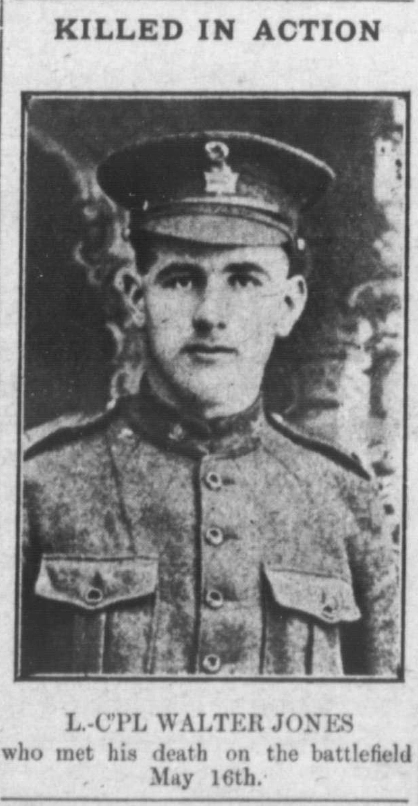
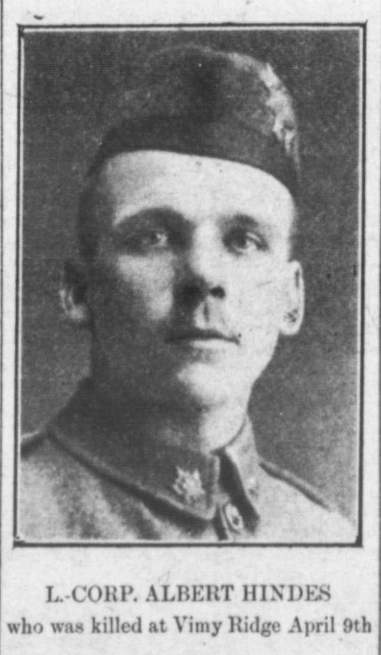
AI recreated photos of Private Fred Dean, Lieutenant Corporal Walter Jones, and Lieutenant Corporal Albert Hindes, and original photos printed in The Equity (inset).
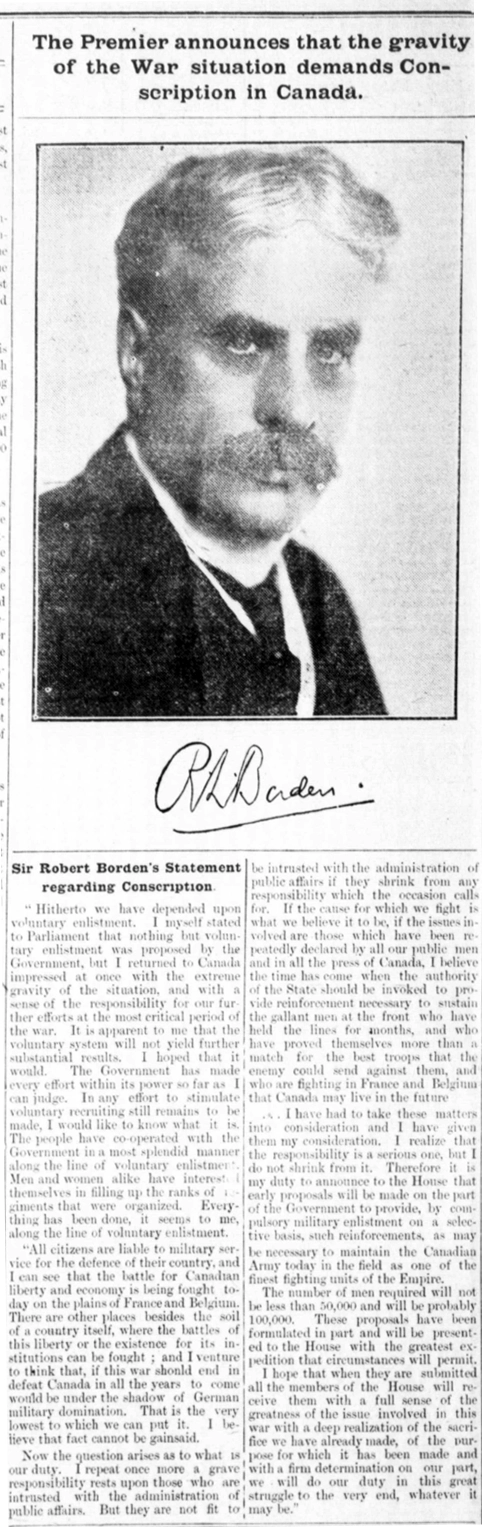
By late spring, the conversation had shifted from sacrifice to obligation. Prime Minister Robert Borden’s announcement of conscription shattered the illusion that Canada’s army could be sustained by volunteers alone. The Equity editorials reflected the mood of English-speaking Canada — unflinching in support of the war, but fiercely critical of those who resisted compulsory service. Sir Wilfrid Laurier and the Quebec Liberal leadership were accused of “truckling to Quebec” and encouraging “shirkers,” language that revealed the raw cultural divide emerging between English and French Canadians.
As the season wore on, the tone of the newspaper — and the people it reflected — was both resolute and weary. The reports from Europe were filled with blood and glory: Canadians advancing at Vimy, pushing the enemy back across the ridge, earning a place in history. Yet the strain of that success was everywhere visible — in the long casualty lists, in the rising food prices, in the quiet fatigue of a community entering its third full year of war. “The Germans,” one editorial insisted, “must be beaten to their knees before we speak of peace.” It was both a rallying cry and a confession of exhaustion.
As summer approached, the Pontiac stood at a crossroads. The triumphs of 1917 had come at an unbearable price, and the country’s unity — once unquestioned — was beginning to splinter under the weight of conscription and hardship. Still, the people of the region pressed forward, their loyalty undiminished, their endurance unbroken. The coming months would bring new challenges — the debates of Parliament, the protests in Quebec, and the continuing agony of the front — but also, perhaps, the first distant hints that the war’s end was no longer unimaginable.
Soldiers Mentioned in The Equity
These names have been extracted from copies of The Equity by AI and may have mistakes. Please let us know if you catch any at jon@theequity.ca.
| Mentioned | Soldier / Personnel | Status / Details |
|---|---|---|
| Apr 5, 1917 | Pte. L. P. (Loren) Hodgins | 87th Battalion. Killed in action Feb 22, 1917, in France. |
| Apr 5, 1917 | Lieut. Godfrey Alan Johnson | 11th Field Co. Canadian Engineers. Awarded Military Cross for capturing 15 soldiers and an officer while unarmed. |
| Apr 12, 1917 | Pte. Duncan Lunam | Son of John Lunam (Campbells Bay). Killed in action in France, March 28, 1917. |
| Apr 12, 1917 | Pte. Robinson | From Waltham. Spent Easter holidays visiting the Capital. |
| Apr 12, 1917 | Howard & Bryson Leggo | Sons of the late Alpheus Leggo (Fort Coulonge). Howard serving overseas; Bryson training in Canada. |
| Apr 12 / May 24 | Pte. Peter Blatchford | 222nd Battalion (Portage du Fort). 19-year-old initially reported wounded, later confirmed killed in action. |
| Apr 12, 1917 | Pte. Lawrence Coyne | From Portage du Fort. Gassed on the battlefield; returned home. |
| Apr 12, 1917 | Aviator P. Kennedy | From Portage du Fort. Killed during an air raid. |
| Apr 12, 1917 | Pte. Wm. Madore | From Portage du Fort. Reported wounded in casualty lists. |
| Apr 12, 1917 | Pte. Richard Vaughan | From Portage du Fort. Believed to have been killed in action. |
| Apr 12, 1917 | McMillan | From Portage du Fort. Gassed but survived; recently returned home. |
| Apr 19 / May 3 | L.-Corp. Harold Armstrong | Described a trench raid in a letter; later reported wounded in the Arras district. |
| Apr 19, 1917 | Pte. Elton Howard | 188th Battalion (Onslow). Reported wounded at the front. |
| Apr 19, 1917 | Pte. E. L. & Ben Edey | Brothers from Bristol. E. L. reported wounded; Ben stationed nearby at the front. |
| Apr 19, 1917 | Capt. Rev. J. A. Macfarlane | Chaplain, 217th Battalion. Denied overseas service due to new age limit regulations. |
| Apr 19, 1917 | Pte. E. V. Amy | Wounded for the second time; recovering at V.A.D. Hospital, Little Heath, England. |
| May 3, 1917 | Tom Tripp | Attached to the 79th Battery artillery drafts. |
| May 3, 1917 | Pte. Duncan H. Robinson | Reported wounded in the casualty lists. |
| May 3 / May 31 | Corp. John N. Landry | Killed in action April 9th during the assault on Vimy Ridge. |
| May 3, 1917 | Pte. Knox & Pte. Cadieux | Roy Knox (Campbells Bay) and O. C. Cadieux (Quyon). Both listed as wounded. |
| May 3, 1917 | Pte. M. Finan & Silas Sturgeon | Both listed in casualty reports as wounded. |
| May 3 / May 17 | Pte. Edward McN. Findlay | From Wyman. Wounded by shrapnel at Vimy Ridge; recovering in Cardiff, Wales. |
| May 3, 1917 | Private John Howard | Listed in the casualty reports as wounded. |
| May 3 / Jun 7 | Private Fred Dean | From Bristol (No. 5 Platoon). Killed in action at Vimy Ridge on April 9th. |
| May 3, 1917 | Pte. Audrey Eades | Mechanical Transport. Wounded during severe fighting in the Arras district. |
| May 10, 1917 | Sgt. Willie Carey | From Starks Corners. Wounded at Vimy Ridge; transferred to HQ 78th Battalion as a runner. |
| May 10, 1917 | Gordon Anderson | 78th Battalion Runner. Awarded the Military Medal for bravery on the Somme. |
| May 24, 1917 | R. Beckett & F. Argue | Raymond Beckett and Forest Argue (Shawville). Both enlisted with heavy siege artillery in Ottawa. |
| May 24, 1917 | Milton Howard | 207th Battalion (Onslow). Relieved from duty due to illness; died in Ottawa hospital. |
| May 24, 1917 | A. Marshall Howard | Fought at Vimy Ridge. Discovered the grave of his brother, Jack, while in France. |
| May 24, 1917 | Jack Howard | Killed in action at Vimy Ridge. |
| May 24, 1917 | Pte. E. G. Proudfoot | Nephew of Mrs. G. H. Brabazon (Portage du Fort). Listed as killed in action. |
| May 24, 1917 | Garfield & Everett Horner | Garfield training in England; Everett serving in the Navy. |
| May 24, 1917 | L.-Corp. Crawford T. Dolan | 87th Canadians. Reported on the death of Edgar Johncox. |
| May 24, 1917 | Pte. George Wilson | 136th Battalion (Otter Lake). Killed in action in France, April 16, 1917. |
| May 31, 1917 | Edgar B. Johncox | 87th Battalion (Portage du Fort). Killed in action at Vimy Ridge, April 9th, age 22. |
| May 31, 1917 | Pte. G. R. Horner | No. 9 Platoon (Machine Gunner). Killed instantly at Vimy Ridge while helping a comrade. |
| May 31, 1917 | Pte. Lawrence Thomas | From Bristol. Initial rumors of his death were confirmed as "happily untrue." |
| Jun 7, 1917 | Claude & Arthur Shaw | 73rd Battery C.F.A. Claude recovering from shrapnel wound to the knee; Arthur also overseas. |
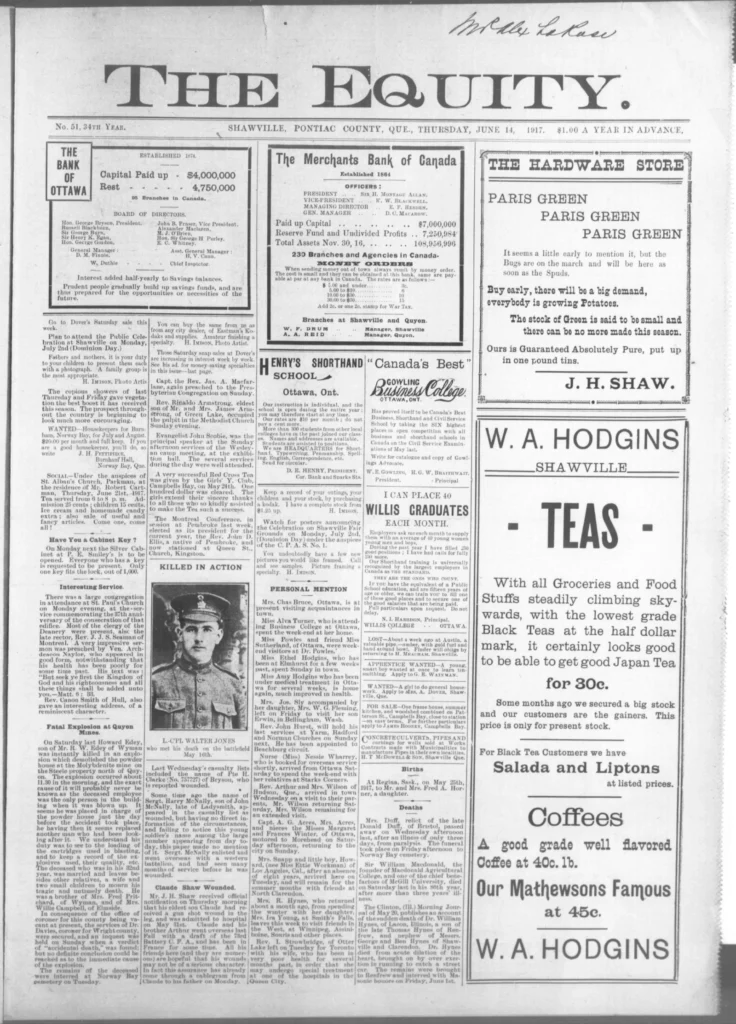
| Jun 7, 1917 | L.-Corp. Albert Hindes | Killed in action at Vimy Ridge, April 9th. Praised for bravery during Somme fighting. |
| Jun 7, 1917 | Louis Ethier (Hickey) | Former Shawville tailor. Served in Bermuda; killed in action in France. |
| Jun 14, 1917 | Erwin Sly | U.S. Coast Artillery; waiting to be called out. |
| Jun 14, 1917 | Dr. Frederic Nicholai | Belgian and Canadian Army Service Corps. Invalided and discharged after severe illness. |
| Jun 21, 1917 | Pte. T. E. Lunam | From Campbells Bay. Listed on the casualty list as wounded. |
| Jun 21, 1917 | Pte. John W. Elliott | 77th Battalion. Wounded for a second time and sent to England. |
| Jun 21, 1917 | Pte. J. Galloway | 38th Battalion (Wyman). Killed while attempting to enter a German trench. |
| Jun 28, 1917 | Willie Wilson | 73rd Battery. Recovered from pneumonia and visiting Green Lake. |
| Jun 28, 1917 | Pte. J. M. Kempt | Mechanical Transport (Blackburn). Visited friends over the weekend. |
| Jun 28, 1917 | Pte. Orlie Thomson | From Portage du Fort. Arrived back from overseas with an honorable discharge. |
Listen to our Podcast!
We’ve used Artificial Intelligence to summarize what was covered in The Equity during this part of the Great War. Click the play button to listen.
Timelines: April - June 1917
Below are the original copies of The Equity from this part of the War. Click any of them to download a PDF copy.