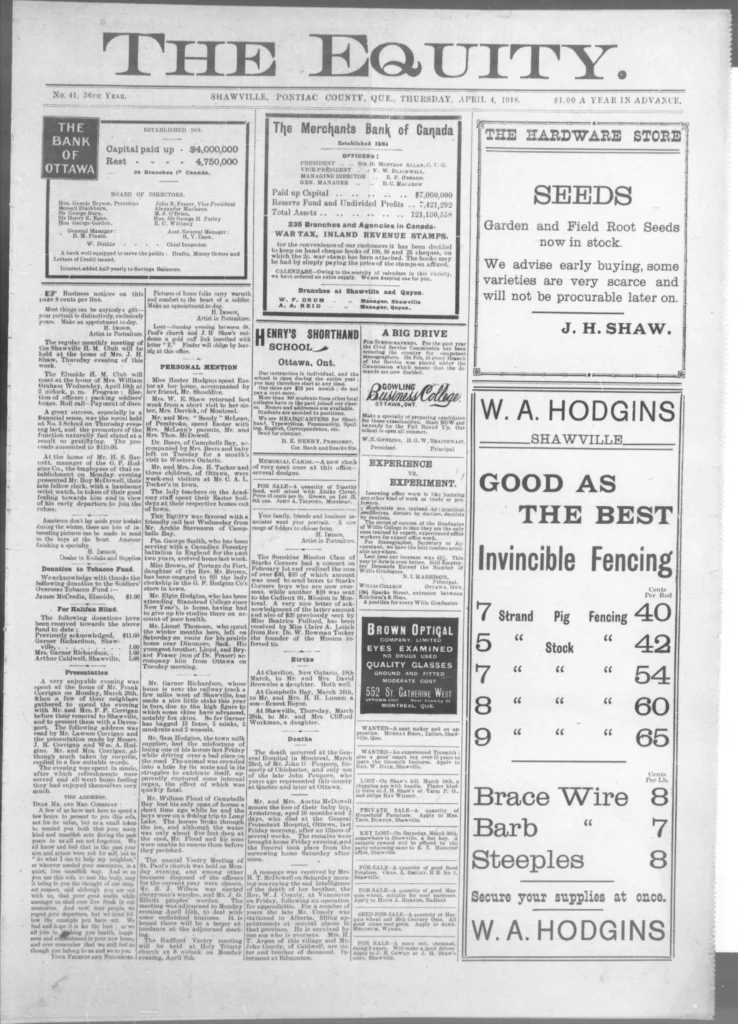
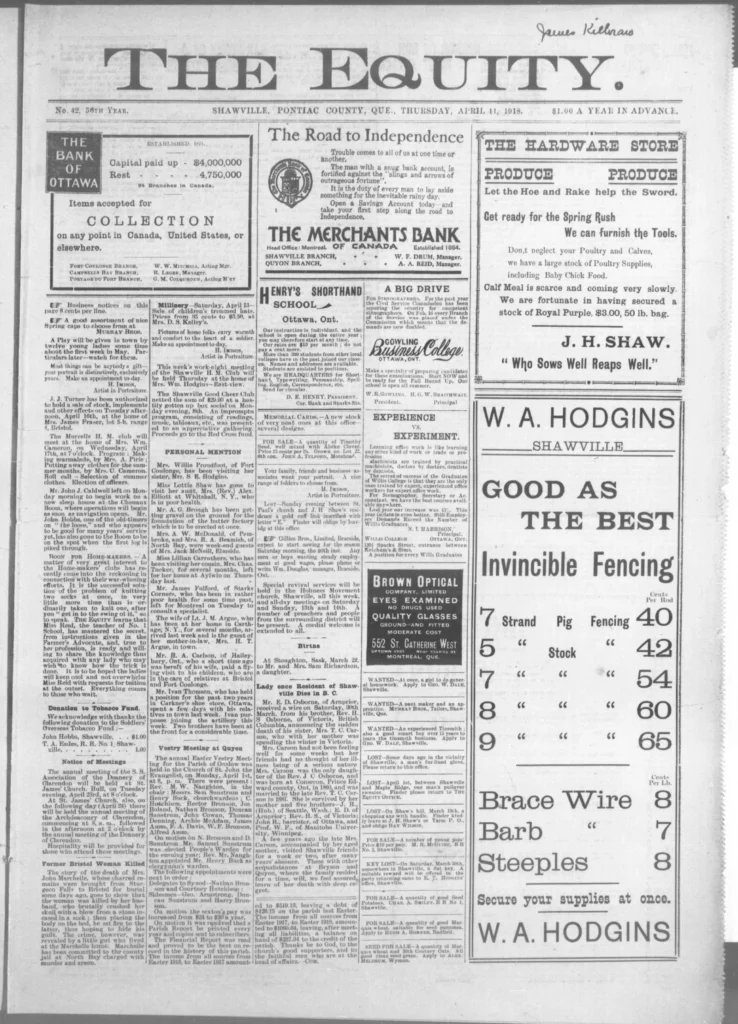
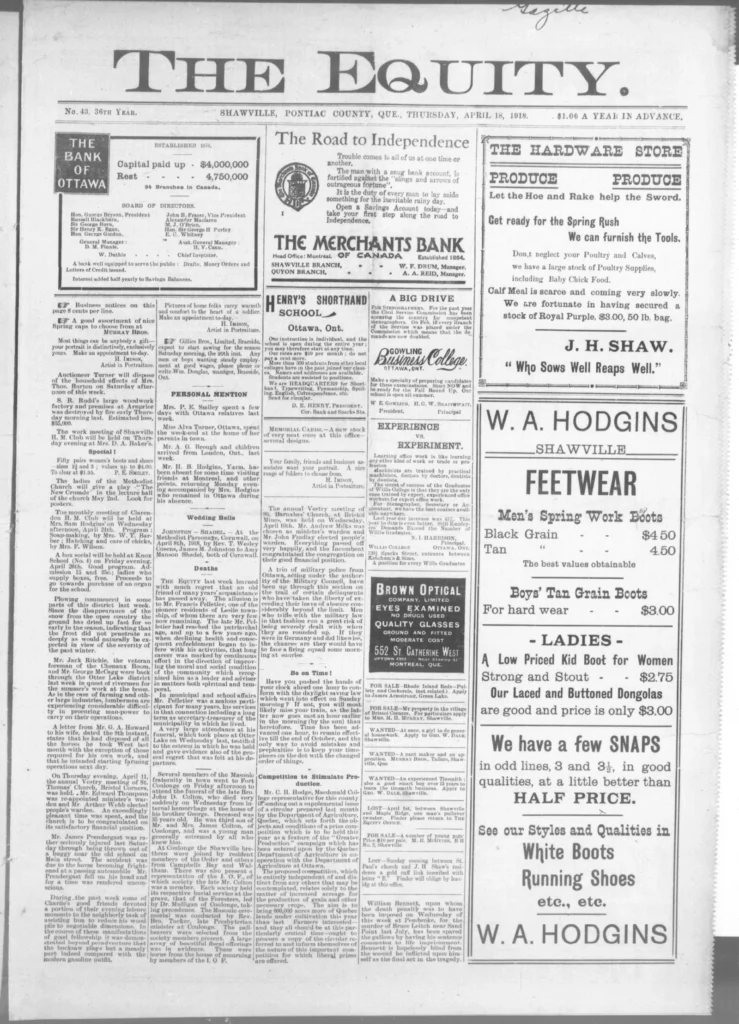
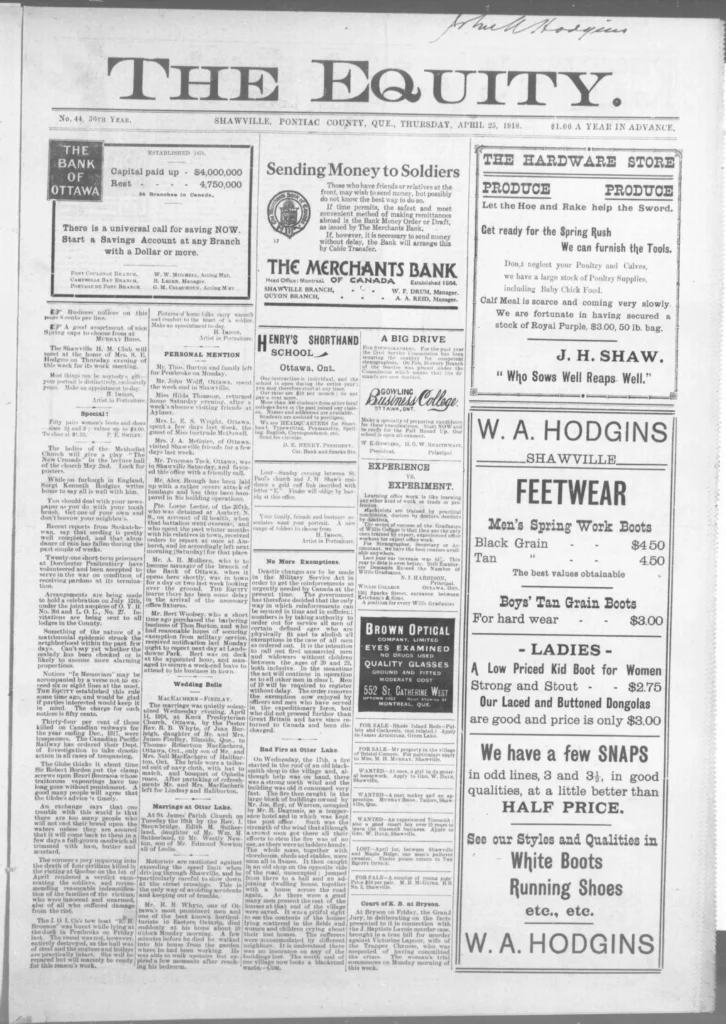
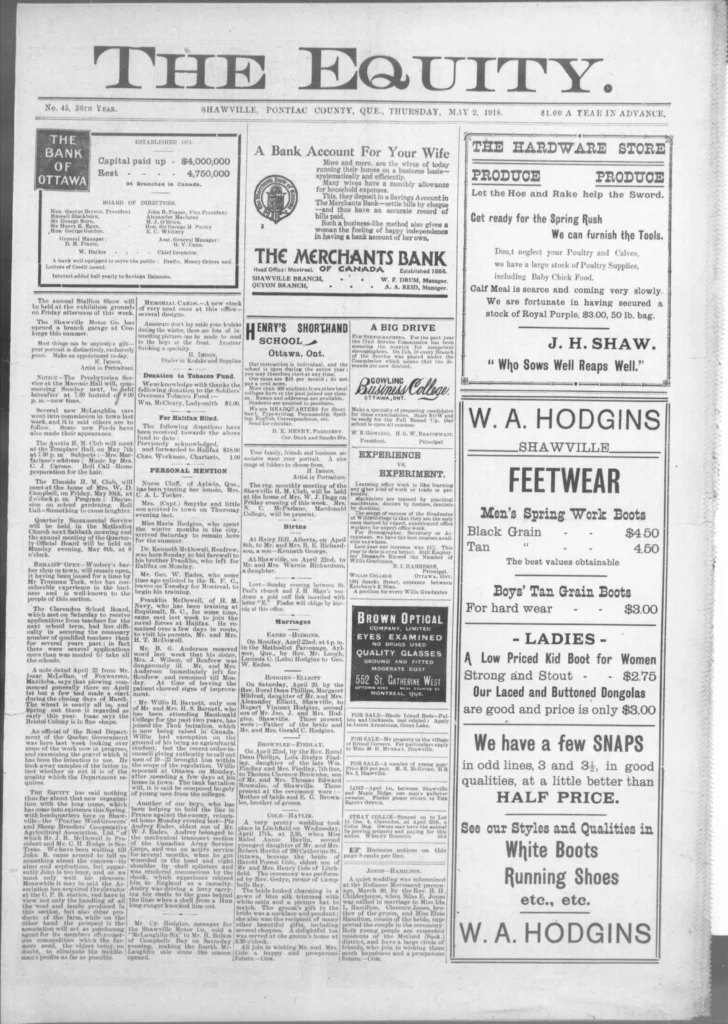
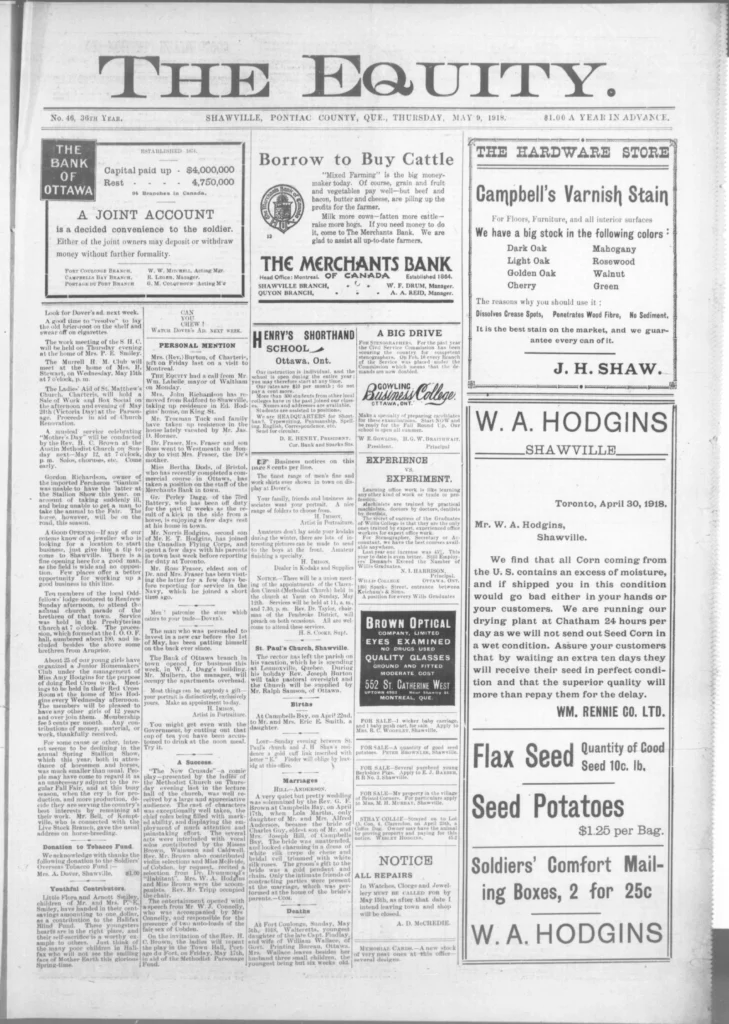
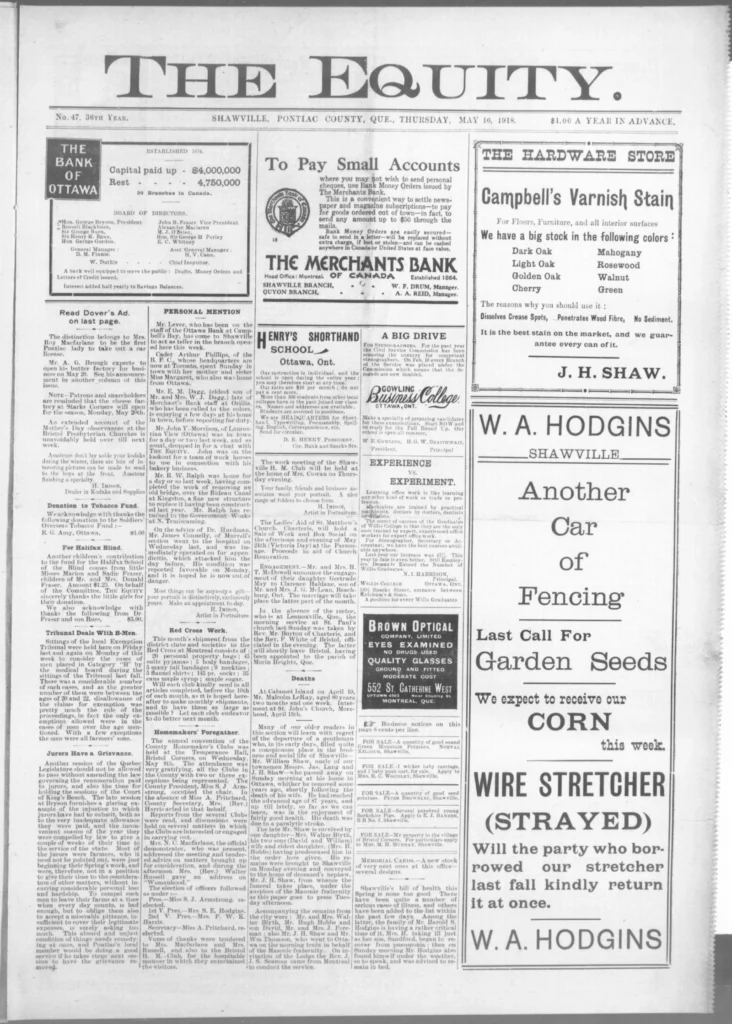
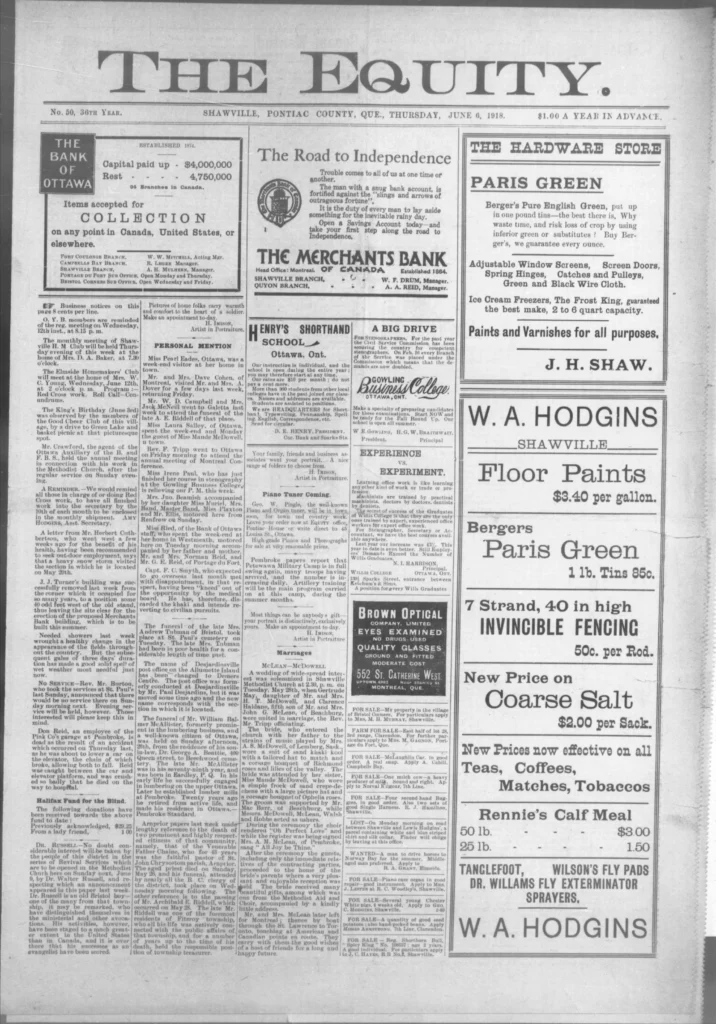
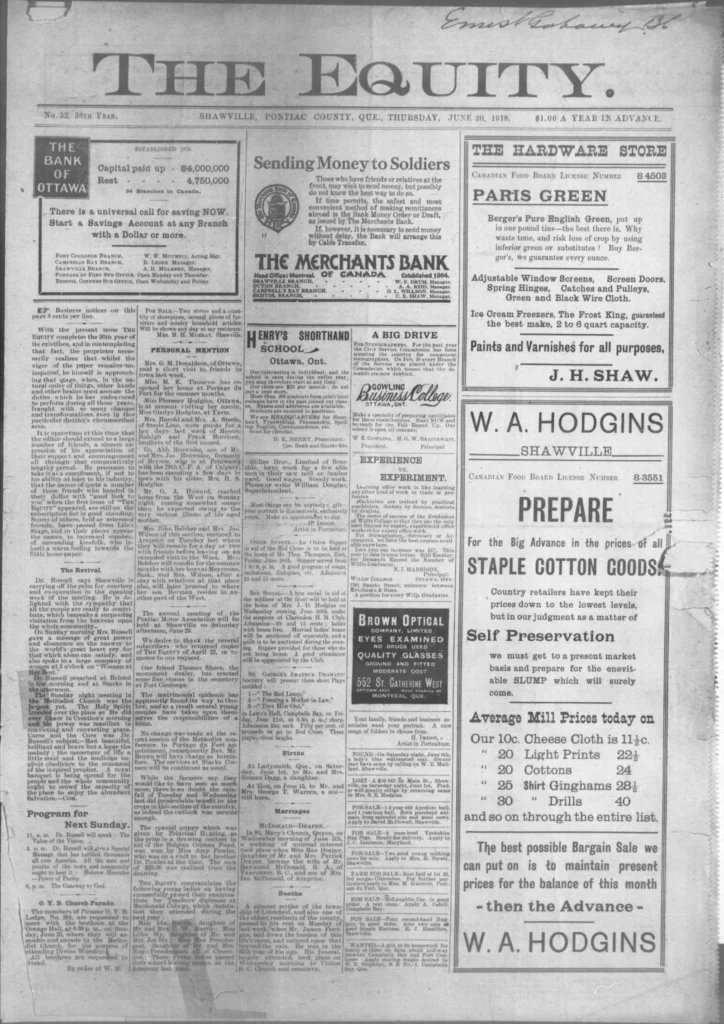
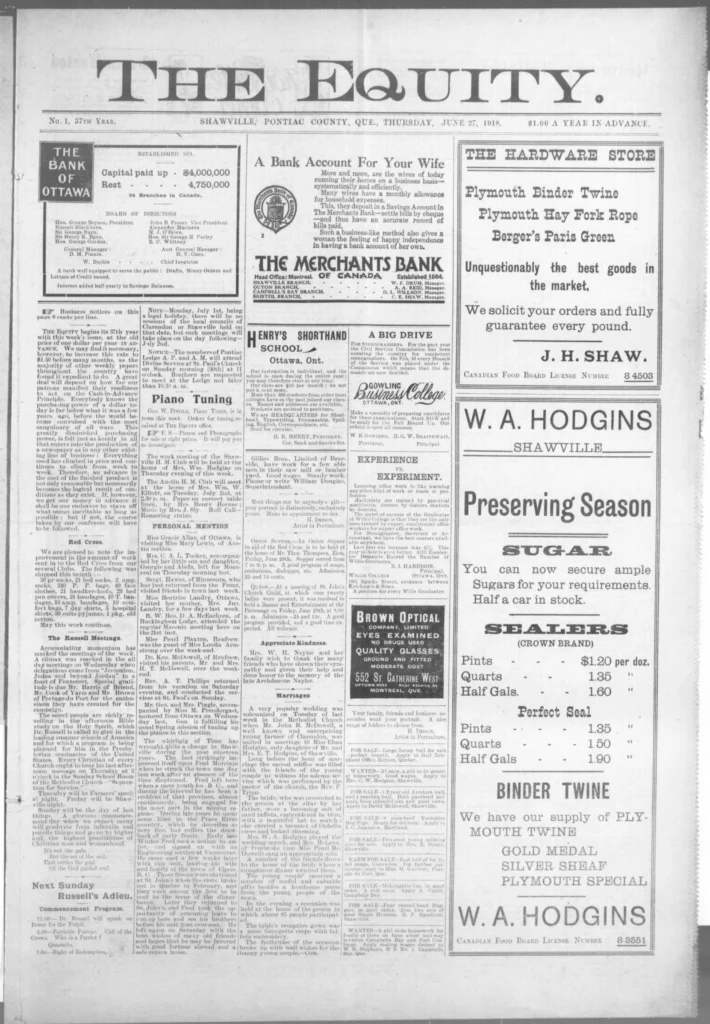
The spring of 1918 the pages of The Equity revealed a community facing national crises of manpower and production while striving to sustain the Allied cause. News of massive German offensives on the Western Front dominated the headlines, and Ottawa’s message was clear: every citizen, farm, and business must contribute to victory.
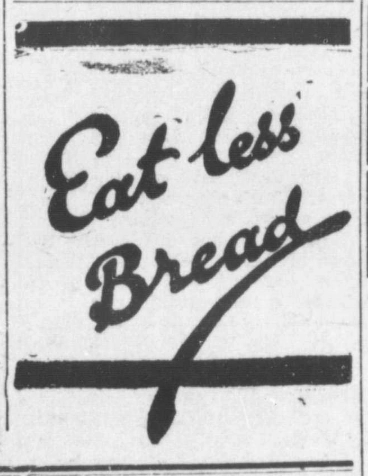
Local Homemakers’ Clubs continued their steady work—holding meetings for roll calls, collecting dues, and packing boxes for soldiers overseas—while social gatherings such as box socials and onion suppers raised funds for the Red Cross. Residents were also urged to invest in the war effort through City of Montreal or Dominion Gold Bonds, reinforcing the notion that patriotism could be measured not only in service but in savings.
Agriculture remained both the backbone and the battleground of home-front life. The Canada Food Board declared food production to be “as vital as the firing line,” imposing strict measures to increase supply. One regulation even prohibited the use of canned vegetables for a time:
It is the intention of the Board to again prohibit the eating of canned vegetables, in Eastern Canada to Oct. 15th., in Western Canada to Nov. 1st., 1918. This will further emphasize the necessity of garden production on the widest possible scale.
The Equity, April 4, 1918
This aggressive push for manpower soon brought Ottawa into conflict with rural Canada. The federal order eliminating military exemptions for young farmers between the ages of twenty and twenty-two provoked outrage across Quebec and Ontario alike.
Local editorials warned that compelling farmers’ sons into service would cripple food production, undermining the very war effort it was meant to support. “Anybody can farm,” officials claimed—but Pontiac farmers knew better. Even with strong late-fall plowing and local cooperation, the shortage of skilled labor placed crops at risk.
The names of local soldiers remained ever-present in The Equity’s columns. The paper carried memorials for Corporal John N. Landry and Private Fred Dean, both killed at Vimy Ridge, while returning veterans like Private Audrey Eades, wounded by shell fragments, were greeted with quiet pride. Letters and photographs were treasured connections; editorials reminded families that “pictures of home folks carry warmth and comfort to the heart of a soldier.”
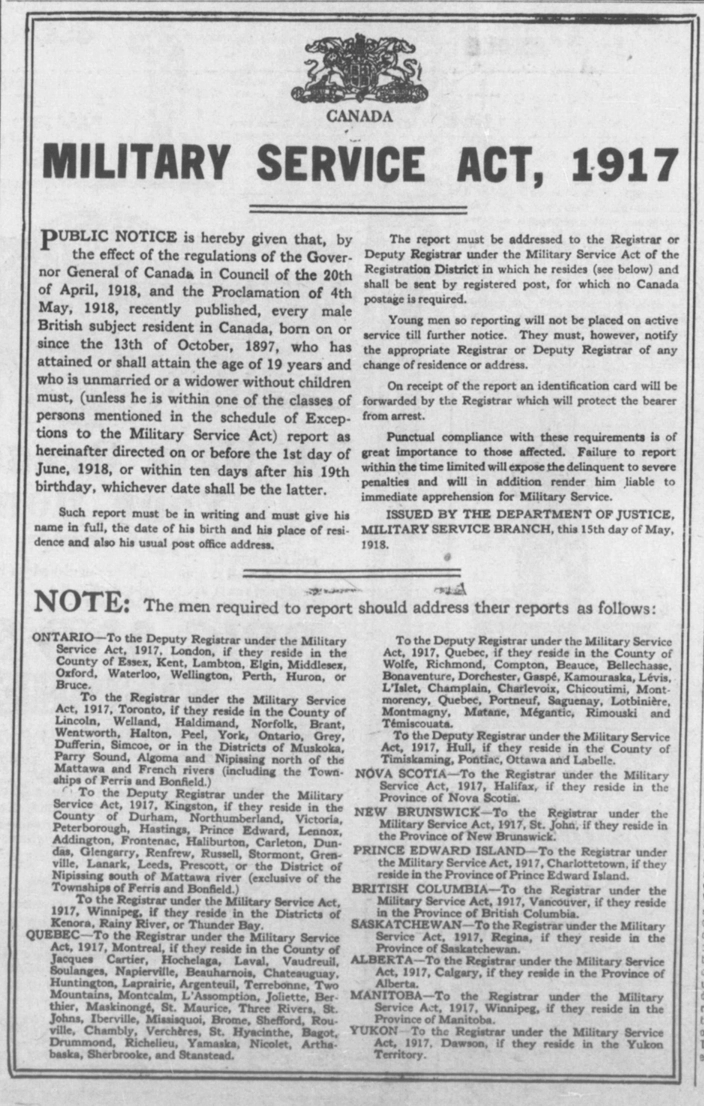
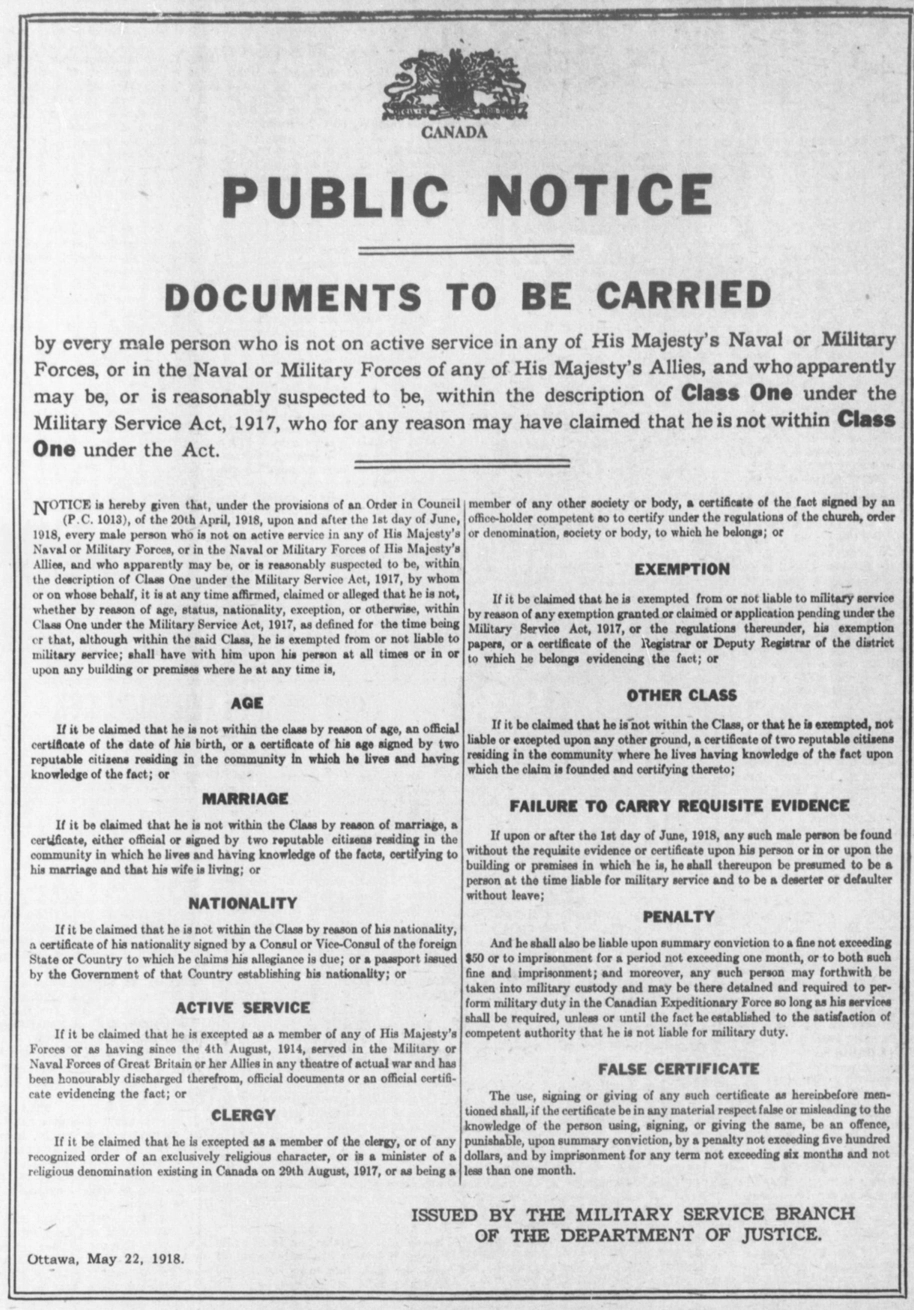
Yet beneath the patriotism, the strain of division persisted. The enforcement of the Military Service Act exposed a deep cultural rift within Quebec. Compliance in the province was notably low—barely 1,700 draftees from more than 34,000 registrants—and violent resistance erupted in Quebec City, where riots led to the destruction of conscription records.
The Equity’s editorial stance aligned with the prevailing English-Canadian sentiment of the era, sharply condemning anti-conscription protests and labeling figures like Henri Bourassa as “traitorous.”
– The Equity, April 25, 1918
But the tension was felt locally as well, especially in Pontiac’s mixed communities, where English and French families often shared farms, churches, and grief but now faced widening political divides.
Through it all, the paper’s tone remained one of weary determination. The war’s fourth spring was marked not by triumph or despair, but by persistence. Every field planted, every meeting held, every subscription raised became an act of quiet defiance against exhaustion.
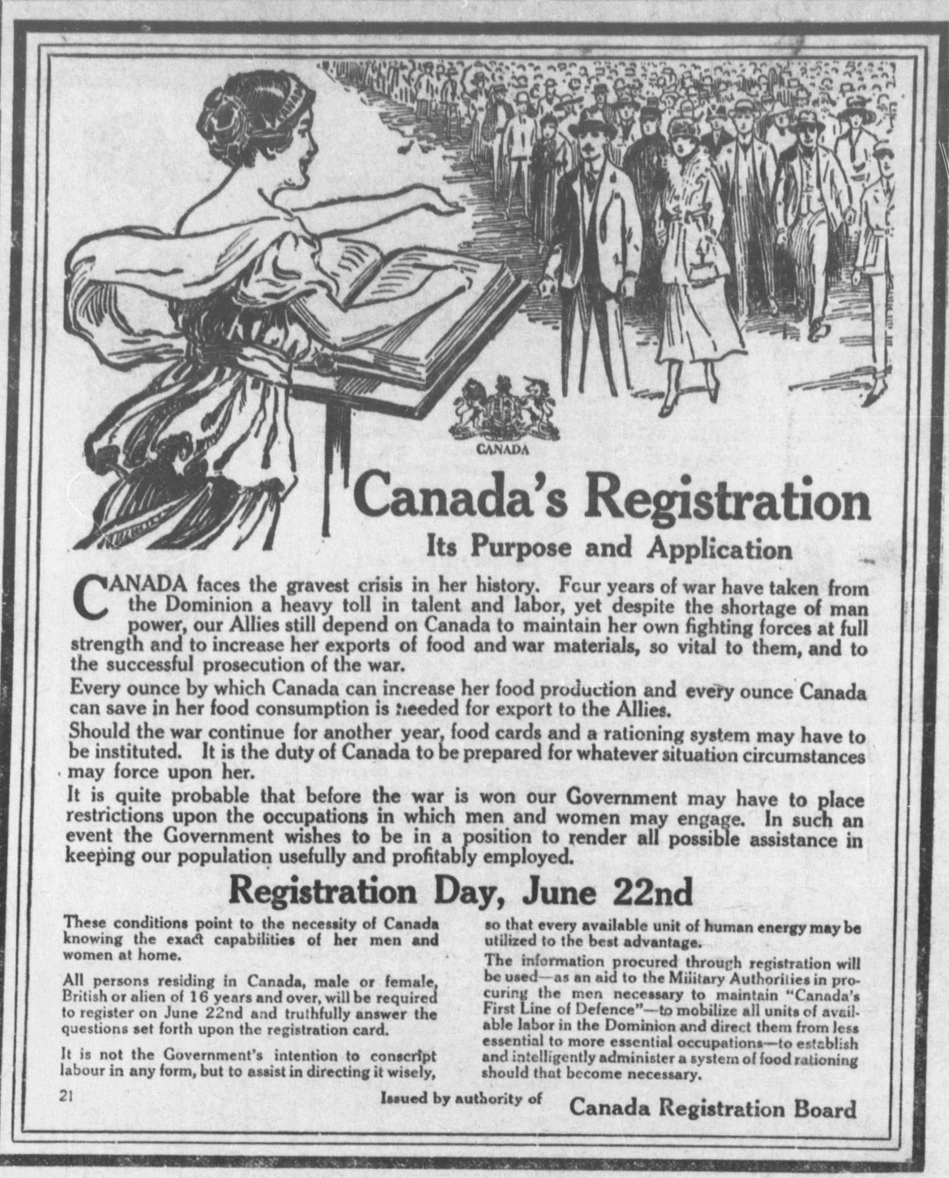
As the season drew to a close, Ottawa introduced a mandatory registration of both men’s and women’s labor, underscoring that the reach of the conflict had become total.
This mandatory registration was introduced to assess the capabilities of the nation’s citizens in order to direct labor toward more essential occupations, assist military authorities in procuring men for the armed forces, and prepare for a potential food rationing system should the war continue for another year. After truthfully answering the questions on their registration cards, citizens were issued a Registration Certificate that they were required to carry on their person at all times
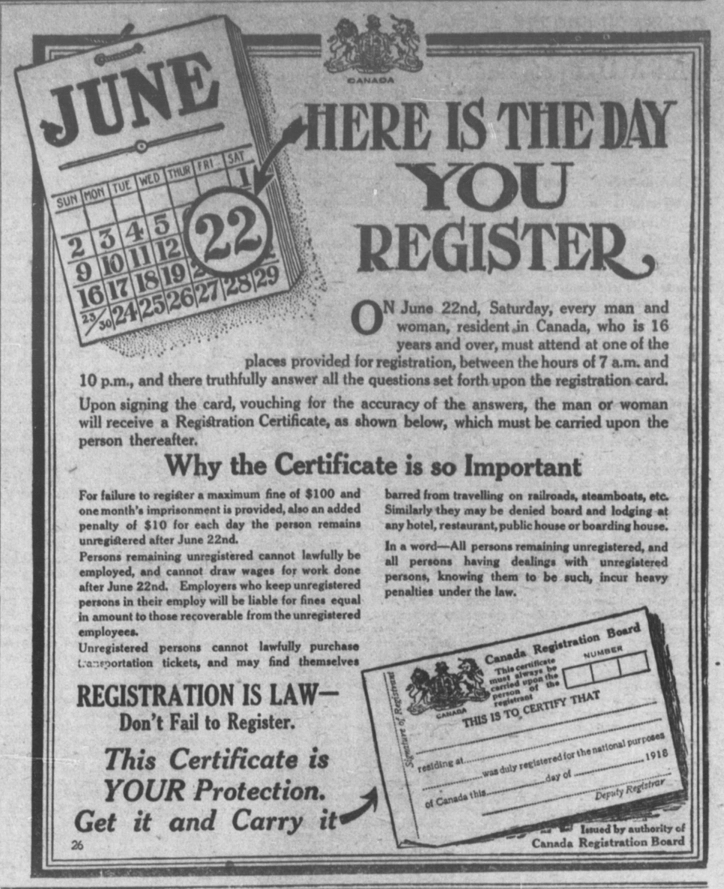
The government imposed strict penalties to ensure compliance. Anyone who failed to register faced a maximum fine of $100 and one month’s imprisonment, along with an additional $10 fine for every day they remained unregistered after June 22nd. Unregistered individuals were barred from lawful employment, could not purchase transportation tickets, and could be denied board and lodging.
The people of Pontiac — Francophone and Anglophone alike — braced for the long campaign ahead, not yet knowing that within months the war would begin its final, decisive turn.
Soldiers Mentioned in The Equity
| Mentioned | Soldier / Personnel | Status / Details |
|---|---|---|
| Apr 4, 1918 | Pte. George Smith | Served with a Canadian Forestry battalion in England; reported to be home. |
| Apr 11, 1918 | Lt. J. M. Argue | Wife arrived from Garthby, N.Y., to visit his mother, Mrs. H. T. Argue. |
| Apr 11, 1918 | Corp. John N. Landry | Memorial mention: Fought and fell at the Battle of Vimy Ridge, April 9, 1917. |
| Apr 11, 1918 | Pte. Fred Dean | Memorial mention: Fell at the Battle of Vimy Ridge, April 9, 1917. |
| Apr 18, 1918 | Eddie Roberts | Ottawa athlete; 207th Battalion (Machine Gun Squad). Killed fighting in France. |
| Apr 18, 1918 | L-Corp. John J. Howard | Memorial mention: Killed in France at Vimy Ridge, April 9, 1917. |
| Apr 25, 1918 | Sgt. Kenneth Hodgins | Wrote home while on furlough in England stating all was well. |
| Apr 25, 1918 | Pte. Lorne Eades | 207th Battalion; left for Montreal to rejoin unit after sick leave. |
| Apr 25, 1918 | Pte. R. A. Anderson | Memorial mention: Fell in France, April 21, 1917. |
| May 2, 1918 | V. C. Eades | Enlisted in the Royal Flying Corps; beginning training in Montreal. |
| May 2, 1918 | Pte. Audrey Eades | Canadian Army Service Corps; returned home after being wounded by shell splinters. |
| May 9, 1918 | Wilson Conoly | 151st Battalion; recovering from trench fever in an English military hospital. |
| May 9, 1918 | W. George Wilson | Memorial mention: Fell in action on May 3, 1917. |
| May 16, 1918 | Cadet Arthur Phillips | Royal Flying Corps (Toronto); visited his mother and sister in town. |
| May 16, 1918 | William Fitzjohn | Spanish-American war veteran from Calumet Island; working on the English side in France. |
| May 16, 1918 | Francis Shea | 17-year-old from Calumet Island; working in France with William Fitzjohn. |
| May 23, 1918 | Sergt. Hawes | From Minnesota; recently returned from the Front and visited friends locally. |
| May 23 / Jun 6 | Dr. Perley Dagg | 72nd Battery; returned to Petawawa Military Camp after injury leave. |
| May 30, 1918 | Cadet Frank Armstrong | Royal Flying Corps; visited relatives and preached at the local Methodist Church. |
| May 30, 1918 | Alex Elliott | From Westmeath; recently joined the Navy and visited relatives. |
| May 30, 1918 | Maj. Agyet A. Mackay | Recently promoted; served as regimental surgeon with 42nd Highlanders. |
| May 30, 1918 | Pte. Karl I. Mackay | Brother to Major Mackay; enlisted at age 17 with 73rd Highlanders. |
| Jun 6, 1918 | J. L. Smyth | Medical board disqualification; returned to civilian life. |
| Jun 6, 1918 | Col. Sam Sharpe | Commanded 116th Battalion at Vimy; tragically died at Royal Victoria Hospital, Montreal. |
| Jun 6, 1918 | Capt. William N. Graham | Son of Hon. George P. Graham; succumbed to wounds received in France. |
| Jun 20, 1918 | Gr. Abb Brownlee | 78th V.F.A. (Calgary); stationed at Petawawa and visited his sister locally. |
| Jun 20, 1918 | Bro. Roy Dagg | Memorial mention: Son of George Dagg; gave his life on the Plains of Flanders. |
| Jun 27, 1918 | Fred Morrison | Engineering section (Vancouver); visited brothers before shipping overseas. |
| Jun 27, 1918 | Orval Armstrong | From Radford; returned home from England after recovering from wounds. |
| Jun 27, 1918 | Archie McCuaig | From Shawville; returned home after recovering from battlefield wounds in England. |
Listen to our Podcast!
We’ve used Artificial Intelligence to summarize what was covered in The Equity during this part of the Great War. Click the play button to listen.